MATERIAL — POLISHED LACQUER (URUSHI)
Eggshell Inlay: A Twenty-Coat Field Record
The pattern here is not drawn. It happens between fragments of shell, set into wet lacquer, buried under coats, and brought back to light by grinding — a web of ice cracks that no hand could have planned.
Posted by AURLUME Editorial · Field Note
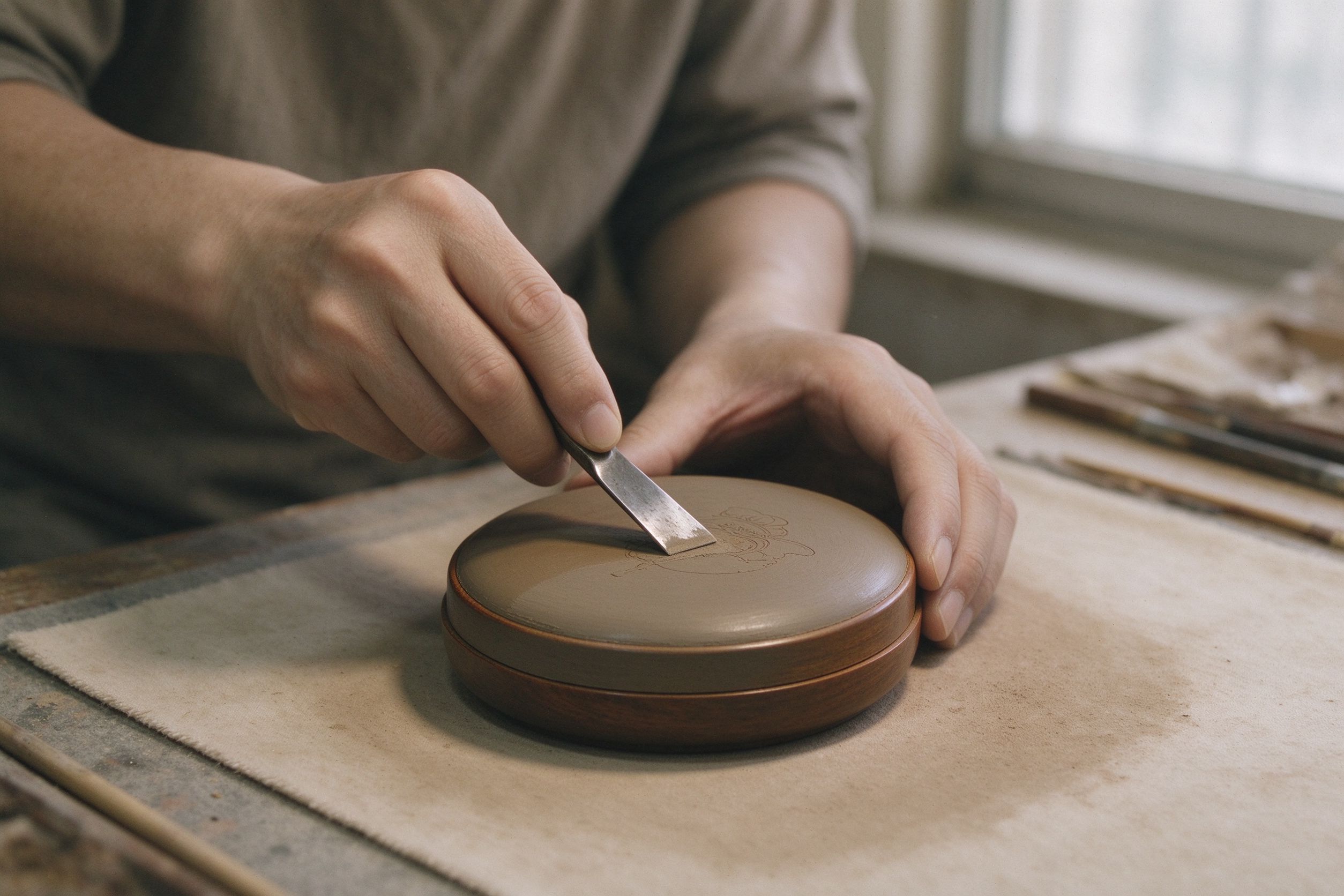
01 — The Prepared Ground
The Prepared Ground
The ground is built first: cloth sizing and graded filler, ground smooth, the motif lightly marked on it. A level base does two quiet jobs — it lets each shell fragment sit flush, and keeps it from lifting or cracking later.
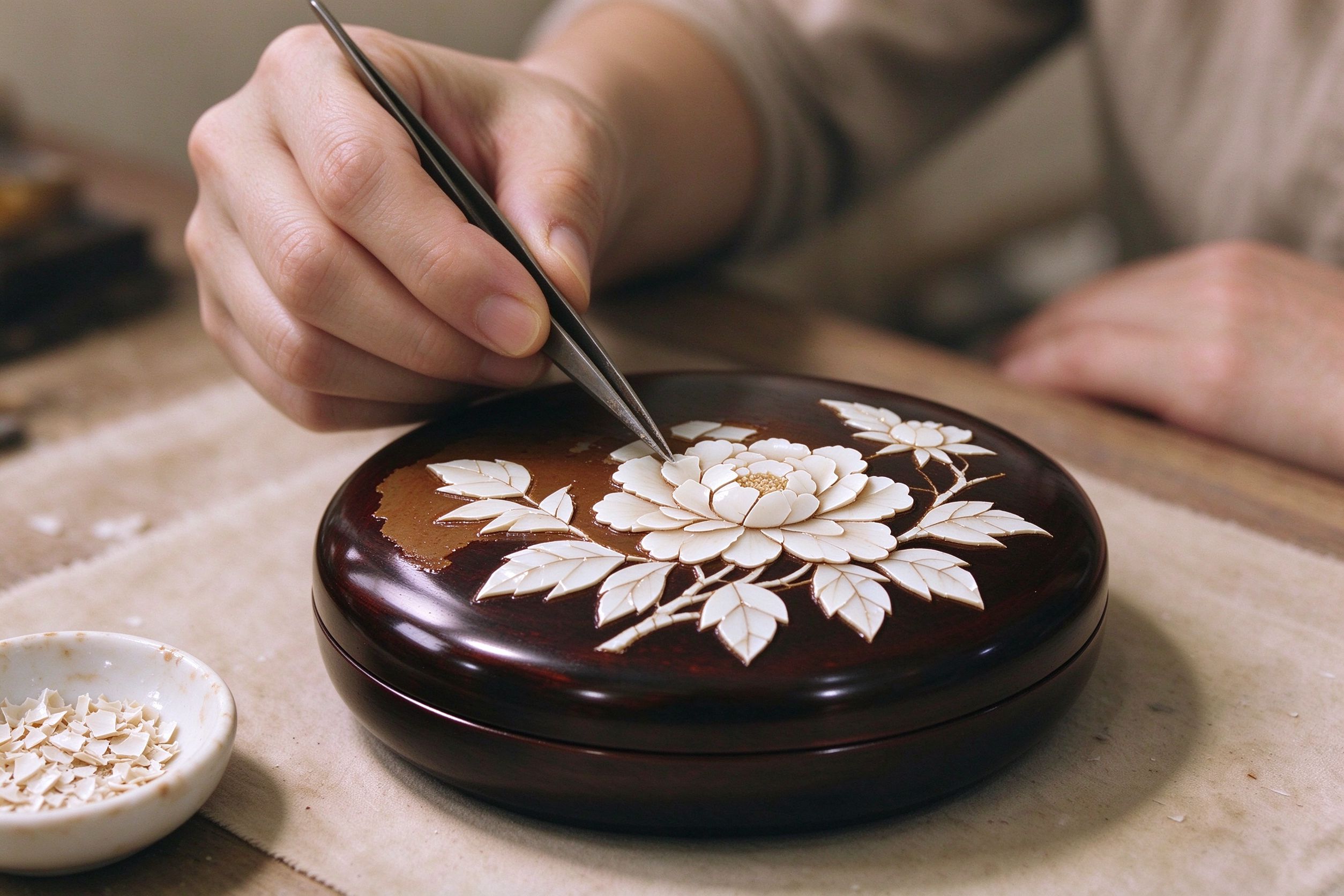
02 — Setting the Shell
Setting the Shell
White eggshell, occasionally duck or dove shell for a softer tone, is washed and its inner membrane — two or three thin layers — peeled away completely; membrane left behind traps moisture and loosens in time. Dried, the shell is broken into small pieces. Working on wet lacquer, the pieces are set one by one with tweezers and pressed flat; the cracks opening between them form a fine ice-web, and that break pattern cannot be prescribed — each pressing yields its own. Once set and cured, the remaining motif is painted in.
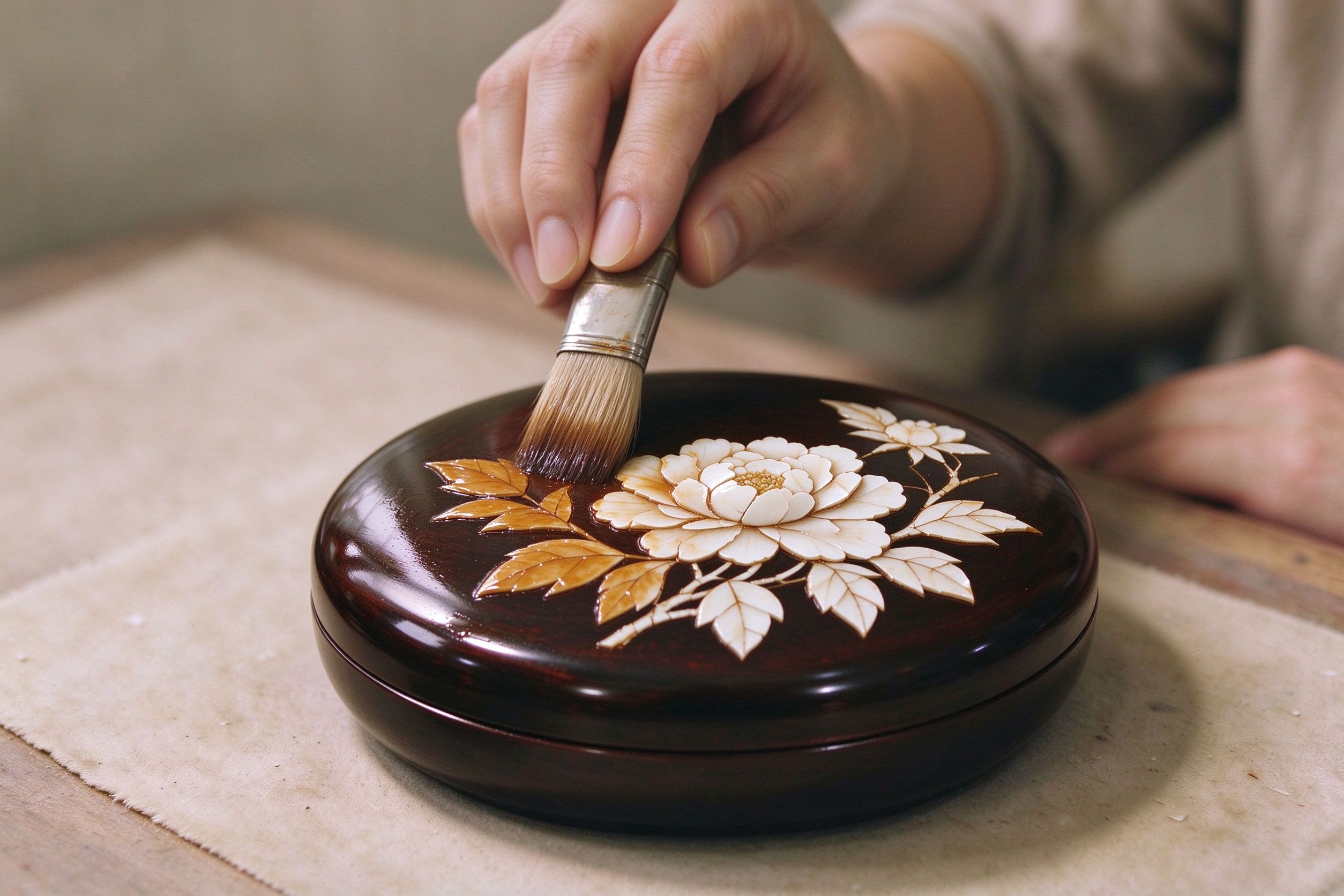
03 — Covering Coats
Covering Coats
The set shell is covered with several successive coats, each resting in the curing chamber at roughly 25–30°C and 75–90% humidity before the next. Whether fragments sit close-packed or leave fine gaps decides how dense the ice-web will read once exposed; shell and motif are now buried beneath one continuous film, kept out of sight on purpose.
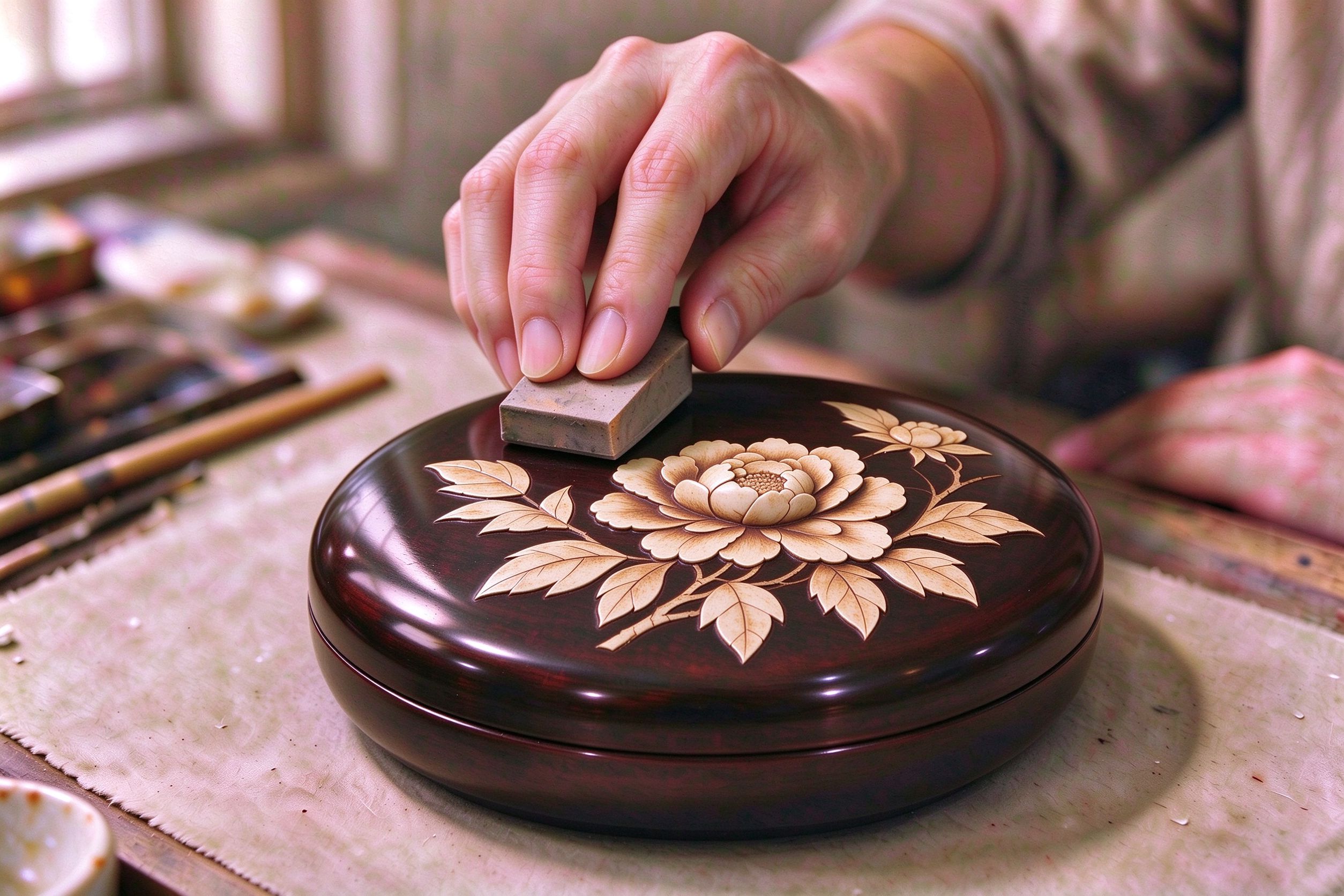
04 — Grinding the Pattern
Grinding the Pattern
Fully cured, the surface is ground back in stages until the white shell emerges through the lacquer — stopped before the fragments themselves wear through — then polished to an even finish. Shell white stands in for the traditional white pigment and never yellows over time; its fine crackle reads clearly against the darker ground.
This twenty-coat route builds more depth than plain urushi; the fifty-coat ground-polished painted piece is recorded separately.
Works made with this material
Objects built on polished lacquer, shown in the creation wall.