Material Guide · Bamboo Filament Weave
Bamboo Filament Weave
Craft heritage originating from Liangping, Chongqing, China
When rigid bamboo culm is split and drawn into hair-fine filaments, it acquires the flexibility of woven sheet material and the delicacy of paper. This is not chemical modification of bamboo, but a hand-driven exploration of a natural material's limits.
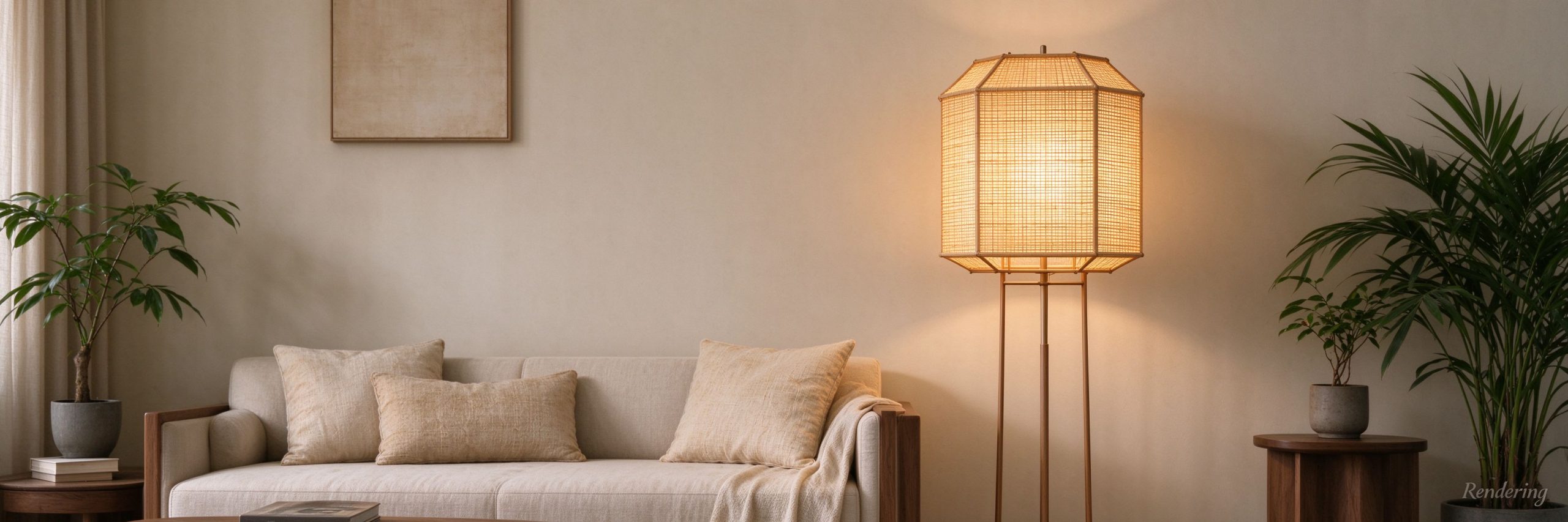
When rigid bamboo culm is split and drawn into hair‑fine filaments, it acquires the flexibility of woven sheet material and the delicacy of paper. This is not chemical modification of bamboo, but a hand‑driven exploration of a natural material’s limits.
In Liangping, Chongqing, China, generations of craftspeople work with Bambusa emeiensis (ci‑bamboo). Through dozens of ancient, labour‑intensive procedures, rigid bamboo poles are split into ultra‑fine bamboo filaments. Instead of reshaping bamboo under high‑pressure machinery, craftspeople rely on fingertip judgement and extensive working hours to turn ordinary bamboo into a hand‑woven substrate balancing luminous light‑transmission and gentle tactile quality.
Natural bamboo filament carries inherent material limitations. Rather than altering the botanical properties of bamboo, craftspeople work alongside and balance these traits through accumulated generational know‑how. Variations in filament thickness, weaving density and post‑treatment create a broad spectrum of surface qualities. Read the full material specification below to understand its craft details, handling boundaries and practical project considerations.
Craft heritage originating from Liangping, Chongqing, China
Request your exclusive material swatch book. Samples are free; only shipping applies (EUR 50 to Europe, shipped from China). Experience light-shadow and texture brought by hand-woven fine-filament bamboo.
Request your exclusive material swatch book (international / domestic shipping fee applies only). Experience light-shadow and texture brought by hand-woven fine-filament bamboo.
Work with this material
Two paths, one material.
Create with it — or bring it into your hands.
Full Specification
Nine chapters — from botanical origin to project care.
1. Material Origin & Botanical Background
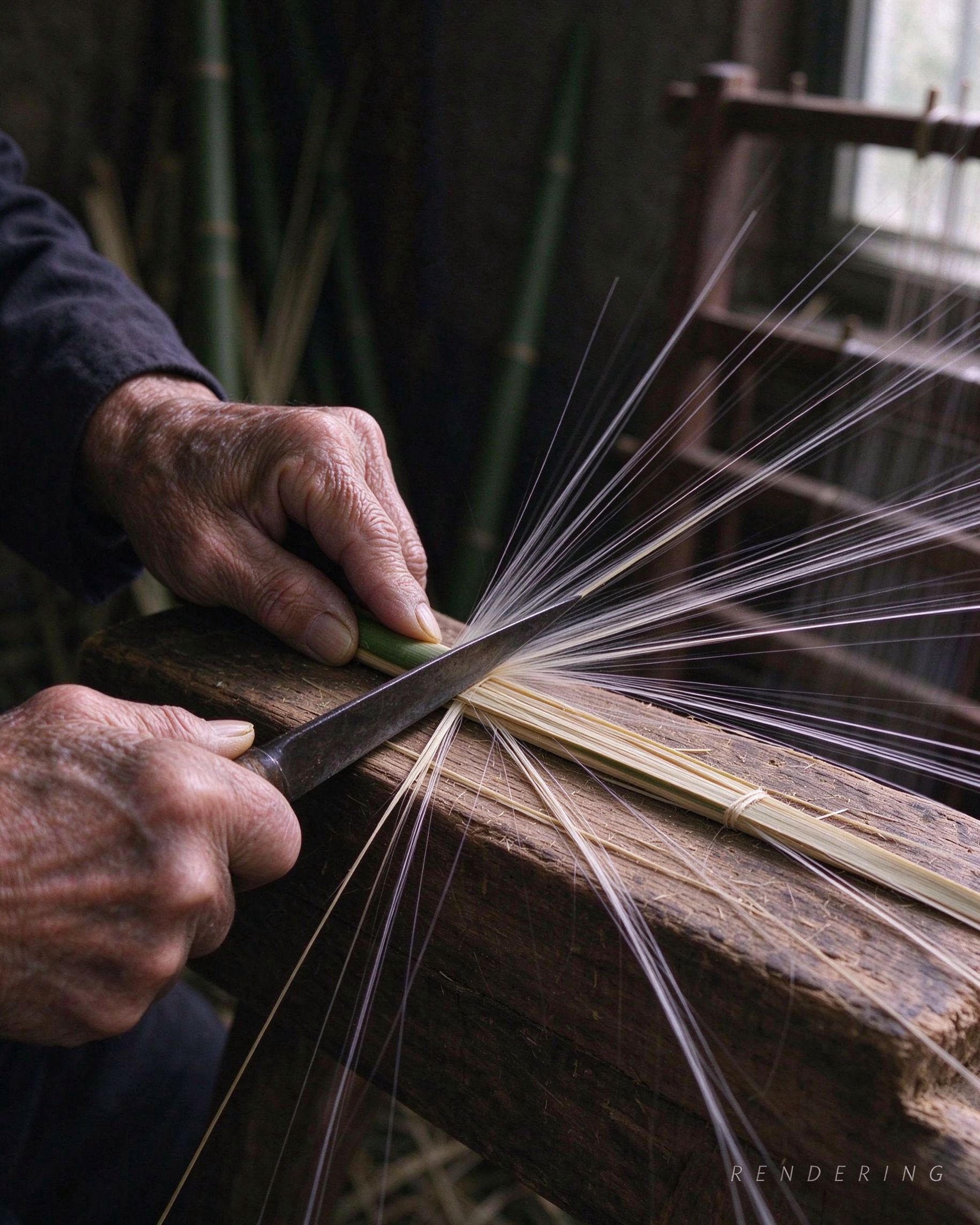
There are roughly 1 200‑1 700 species of bamboo worldwide. China hosts 47 genera and 770 species, nearly half of global bamboo diversity, making it a global centre for bamboo biodiversity. The unique geography and climate of Southwest China nurture rich bamboo flora. Among them, Bambusa emeiensis (ci‑bamboo) and liao‑ci‑bamboo are preferred for hand‑splitting fine‑filament work: thin‑walled, long‑fibred and highly flexible. Its extra‑long internodes allow fine splitting and filament‑drawing without frequent breakage, and it serves as the core raw material for Bamboo Filament Weave.
AURLUME Bamboo Filament Weave inherits a national‑level intangible cultural heritage handcraft originating from Liangping, Chongqing. We select mature 3‑year‑old overwintered (winter‑harvested) Bambusa emeiensis. Only the mid‑section of bamboo poles is adopted; knuckles and scarred sections are discarded. Raw‑material loss is substantial: from one hundred jin of ci‑bamboo, merely three to four jin of usable bamboo filament can be obtained.
The complete traditional workflow includes bamboo‑selection, primary splitting, strip‑breaking, hand‑filament‑drawing, filament‑drying, warp‑thread preparation, wooden‑loom weaving and finishing-trimming. The sheet is woven entirely from hand-drawn bamboo filaments, warp and weft alike — no silk warp, no metal frame, no adhesive; its texture and light performance come from the bamboo filament itself.
Compliance note: Filaments are mechanically split from solid bamboo culm, not chemically regenerated cellulose.
Machine‑cut bamboo filament features sharp edges. By contrast, hand‑drawn filament retains subtle natural fibre fuzz. During weaving these fine fuzzes interlock, generating the material’s signature soft‑matte tactile quality.
At its finest, Art‑Gauge filaments reach 0.2‑0.3 mm in diameter, with weaving density above 15 threads per centimetre — as fine as human hair. Ci-bamboo matures within three years and possesses strong regenerative capacity. Combined with natural tung‑oil finishing, the material delivers low‑carbon properties and is biodegradable at end‑of‑life.
Note: This collection exclusively uses handcrafted blanks from local Liangping workshops. Machine‑woven industrial bamboo sheet is not adopted.
2. Fibre Composition & Physical Behaviour
Ci-bamboo filament is a natural plant-fibre material, inherently containing organic substances such as starch and sugar. These biological characteristics bring an innate susceptibility to mildew under humid conditions.
Hand-drawing preserves native bamboo-fibre structure without heavy mechanical abrasion. Finished blanks can be gently curled like sheet material, yet fine filaments retain plant-brittleness. In dry condition the natural lignin skeleton keeps the sheet firm and crisp; brief exposure to slight moisture does not readily cause it to sag, though prolonged high humidity remains unsuitable.
Generations of Liangping craftspeople did not seek to modify bamboo’s botanical nature. Instead they developed the multi‑coat mild tung‑oil curing process to mitigate material weaknesses.
Tung‑oil is a traditional Chinese drying vegetable oil. It penetrates into bamboo‑filament interiors and passivates starch and sugar, markedly reducing mildew risk. Please note that it cannot resist prolonged continuous high‑humidity environments.
This is a hand‑dependent balancing craft: too‑heavy oil coats will obscure the luminous light‑transmission of bamboo filament; insufficient coats offer limited protection. The balance relies entirely on inherited craft intuition.
3. Filament Grades & Weaving- Process Profile
Bamboo Filament Weave is graded by filament fineness and weaving density. Two base blank-types are available after weaving: untreated natural-base blank (Suxin) and powder-primed blank (Tangxin).
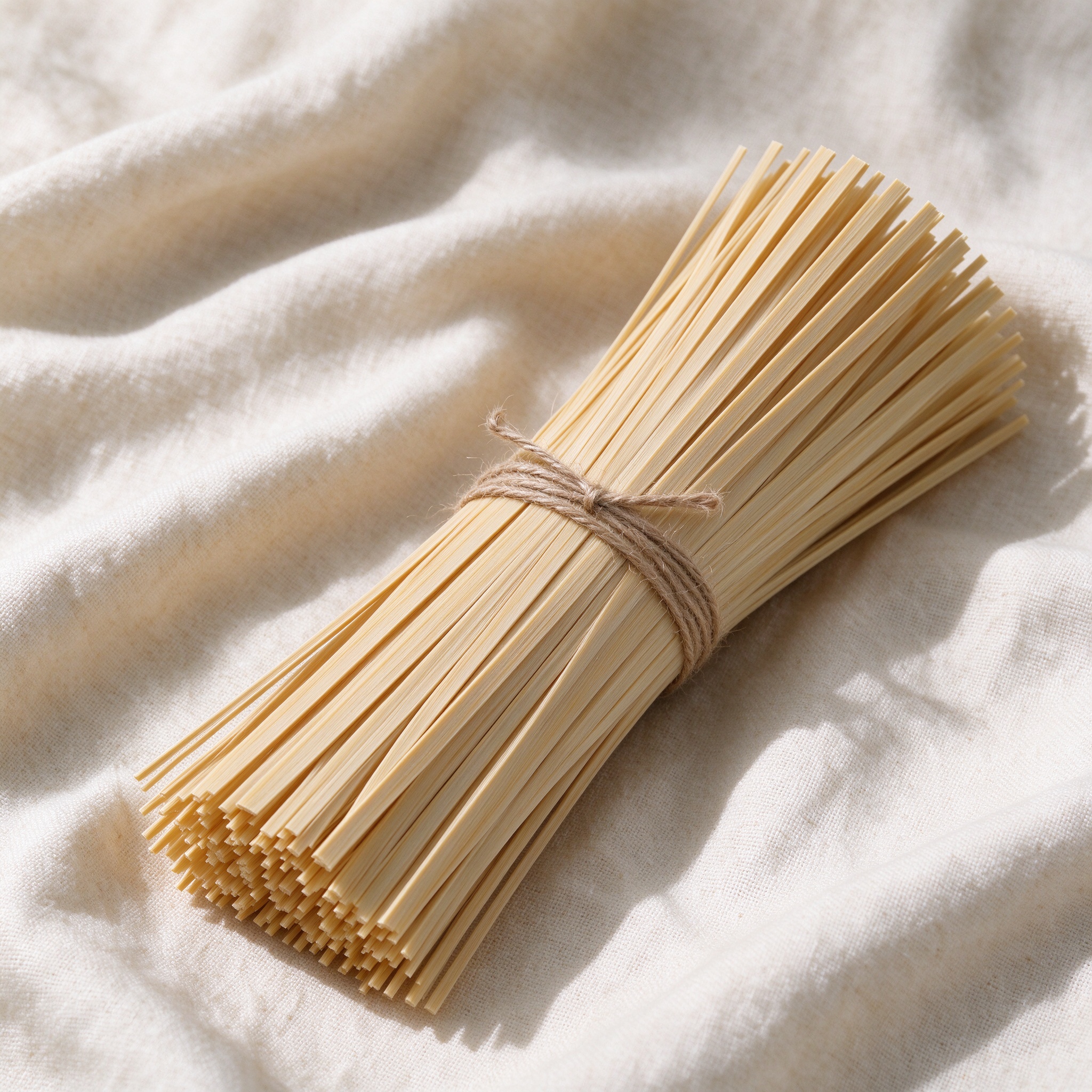
Structural-Gauge Bamboo Filament Weave
Relatively thick bamboo filament woven with a subtle open texture, built for spatial structure.
Texture: Bold yet refined three-dimensional texture, strong light-transmission, distinct visible skeleton.
Post-treatment: Natural tung-oil curing, optional.
Applications: Space dividers, screens, large-scale decorative curtains, partition panels.
Surface-change: Tung-oil finish gradually develops a warm-amber tonal shift over time.
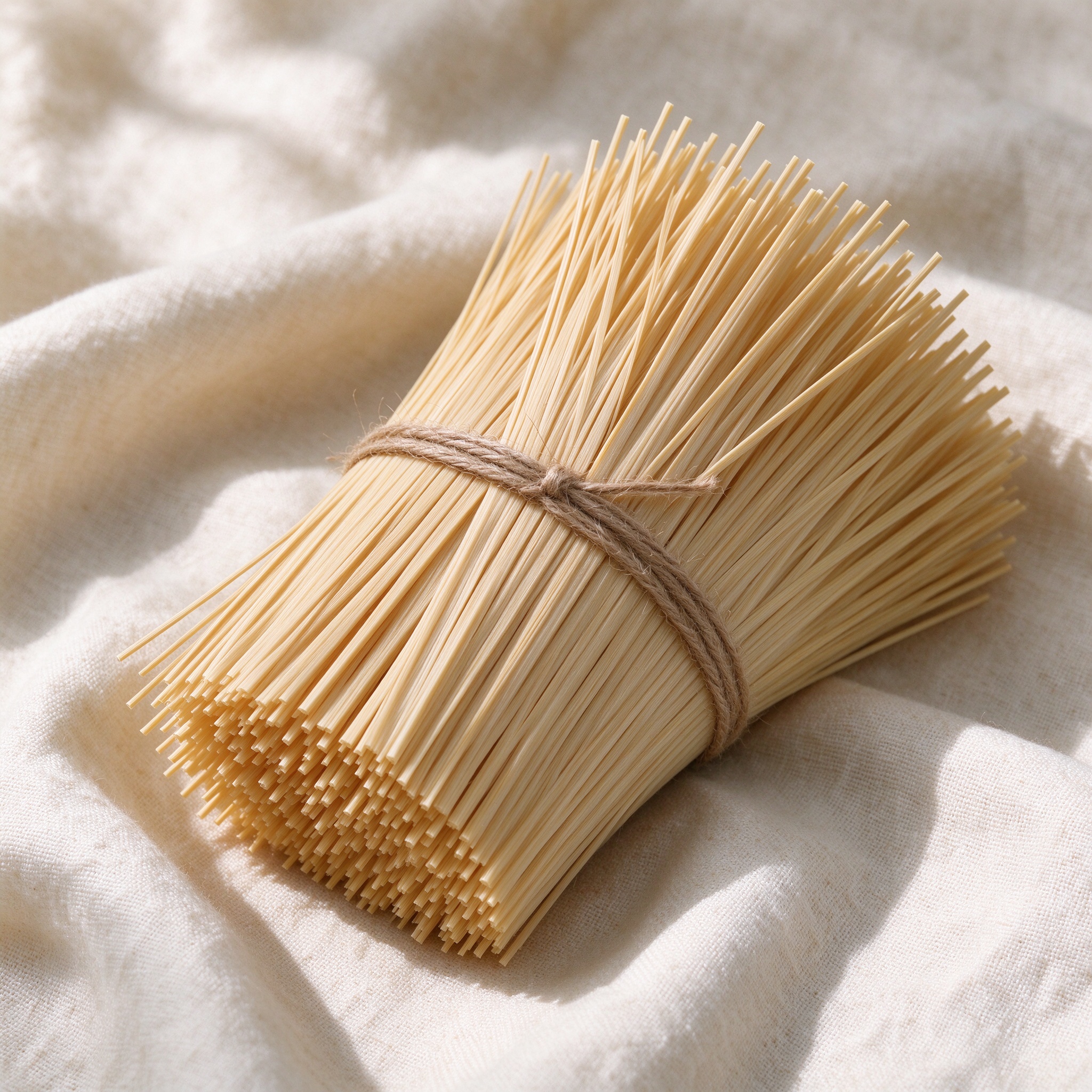
Fine-Gauge Bamboo Filament Weave — Lumibambus Series
Uniform fine-filament, tightly and evenly woven — the signature AURLUME grade.
Texture: Soft, delicate hand-feel; translucent, balancing light-transmission with complete sheet integrity.
Post-treatment: Natural tung-oil curing as standard; powder-primed (Tangxin) blank optional.
Applications: lampshades, cabinet-door facings, interior drapery, wall-decor panels.
Surface-change: Tung-oil finish gradually develops a warm-amber tonal shift over time.
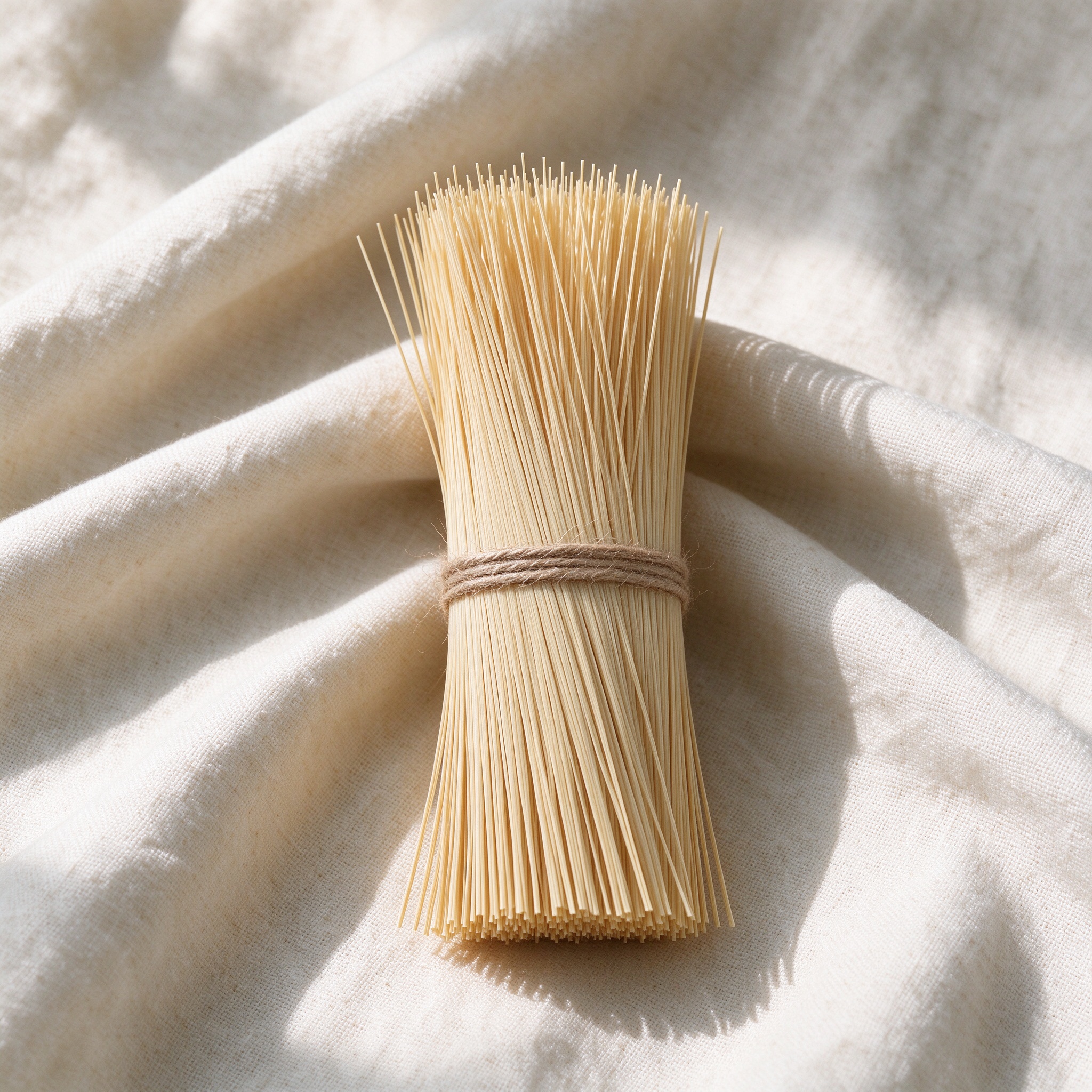
Art-Gauge Bamboo Filament Weave — Lumibambus Series
The finest hand-achievable weaving grade — even fine-filament, silk-like sheet, a high-performance artistic substrate.
Texture: Dense, uniform sheet; subtle fibre texture; soft light-transition performance.
Post-treatment: Natural tung-oil curing; powder-primed (Tangxin) blank optional.
Applications: Art-installation substrates, light-backing panels, hanging artistic curtains, screen-print / digital-print carrier, embroidery composite, collector-grade hanging screens.
Surface-change: Tung-oil finish gradually develops a warm-amber tonal shift over time.
Blank-type supplementary description
— Suxin (natural-base blank): tung-oil finishing applied directly onto woven bamboo filament, preserving native bamboo colouration. — Tangxin (powder-primed blank): thin powder primer layer applied to sheet surface, offering flat substrate suited for print and handwork secondary processing.
4. Working Characteristics & Physical Constraints
Bamboo Filament Weave is a plant‑fibre woven sheet. Even after mild tung‑oil curing, inherent physical boundaries remain, intrinsic to this fine‑filament natural material.
- Curling & folding: gentle curling for storage and transport is permitted. Violent, repeated sharp folding will cause irreversible bamboo-filament breakage.
- Width limitation: native hand-loom width is constrained by natural ci-bamboo pole dimensions. Large-format works require hand-joined multi-panel assembly; joining seams are an inherent craft feature.
- Secondary processing: blanks can be cut to fit project dimensions. Cut edges require edge-protection treatment to prevent filament fraying.
5. Surface & Colour- performance Boundaries
Base colouration derives from native ci-bamboo tone plus tung-oil oxidation effects.
- Structural-Gauge: preserves natural bamboo colour variation, shifting toward warm amber-brown after tung-oil treatment.
- Fine-Gauge — Lumibambus Series: more uniform filament tone; natural-base version delivers soft bamboo-yellow hue; powder-primed blank presents pale-off-white substrate.
- Art-Gauge — Lumibambus Series: natural-base version delivers clean warm tone; powder-primed blank serves as neutral substrate for secondary print or composite processing.
Secondary dyeing is possible, yet natural-fibre dye-absorption creates subtle tonal variation. It is not suited for requirements of perfectly uniform high-saturation industrial colours. Tung-oil treatment delivers basic protection but does not render the material waterproof.
6. Time- Dependent Surface Behaviour
Like many plant-based materials finished with natural vegetable oil, Bamboo Filament Weave evolves under indoor light and air circulation.
Fully-cured tung-oil film slowly shifts toward warm-amber tones under light and oxidation, developing a patina-like temporal quality. This is distinct from wear-generated patina formed by long-term handling and friction on artefacts.
— Structural-Gauge: colour-shift effect is visually more pronounced.
— Fine-Gauge — Lumibambus Series: gentle warm-tonal deepening occurs over time.
— Art-Gauge — Lumibambus Series: natural-base blank slowly acquires warm-amber quality; powder-primed blank exhibits comparatively moderate colour-shift.
Ageing performance varies piece-by-piece; uniform change across all articles cannot be guaranteed.
01 — CO-CREATION
Co-create with Bamboo Filament Weave
Bring a concept and the community decides. If it reaches 100 votes, our artisans prototype it — and you earn 20% on every piece sold, for life.
Co-Creation Studio · voting opens for every project
02 — ORDER & SOURCE
Order samples · Source the material
Feel the hand-woven fine-filament texture first, or source sheets for your own studio, collection or project.
Source raw material→
for co-creators, studios & production batches
7. Material Documentation & Project Considerations
Material documentation is available for selected production batches and applications. Depending on weave grade, blank-type and surface-finish, deliverables may include raw-material statements, handcraft declarations, tung-oil-process statements and available third-party test reports.
Important fire-safety note: Natural bamboo-filament substrate with tung-oil finish is inherently combustible. It requires additional independent flame-retardant post-treatment if specified for public-commercial interior projects. Inherent tung-oil finishing does not provide flame-retardant performance.For contract, hospitality or public-sector projects, fire-safety, stain-resistance, chemical-compliance and end-use suitability must be reviewed before specification. Even with tung-oil curing, this material is not intended for persistently high-humidity or wet-zone environments.
8. Application Scope, Acceptance Criteria & Care Guidelines
- Structural-Gauge: space dividers, screens, large-scale spatial decorative curtains
- Fine-Gauge — Lumibambus Series: lampshades, cabinet-door facings, interior drapery, wall-decor panels
- Art-Gauge — Lumibambus Series: art-installation substrates, light-backing panels, hanging artistic curtains, screen-print / digital-print carrier, embroidery composite substrate, minimal collector-grade hanging screens
Process limitations: constrained native hand-loom width, multi-panel joining required for large-format works; unsuitable for persistent-humid zones; violent repeated sharp folding must be avoided.
Hand-material acceptance criteria
- Minor filament-thickness deviation, subtle natural fibre fuzz and faint tonal unevenness are inherent hand-craft characteristics, not production defects.
- Joining seams on large-format assembled works are expected hand-craft features.
- Slight coating-thickness variance originating from hand-applied tung-oil finishing does not constitute manufacturing defect.
Segmented care instructions
— For all grades: maintain dry-indoor conditions. Washing is prohibited, as water will destroy the tung-oil protective film. Only use soft-bristle brush or dry soft-cloth for dust removal.
— Avoid continuous intense direct sunlight which accelerates uneven colour-oxidation.
— Store by gentle curling; hard repeated folding is forbidden.
9. Co-Creator Swatchbook Service
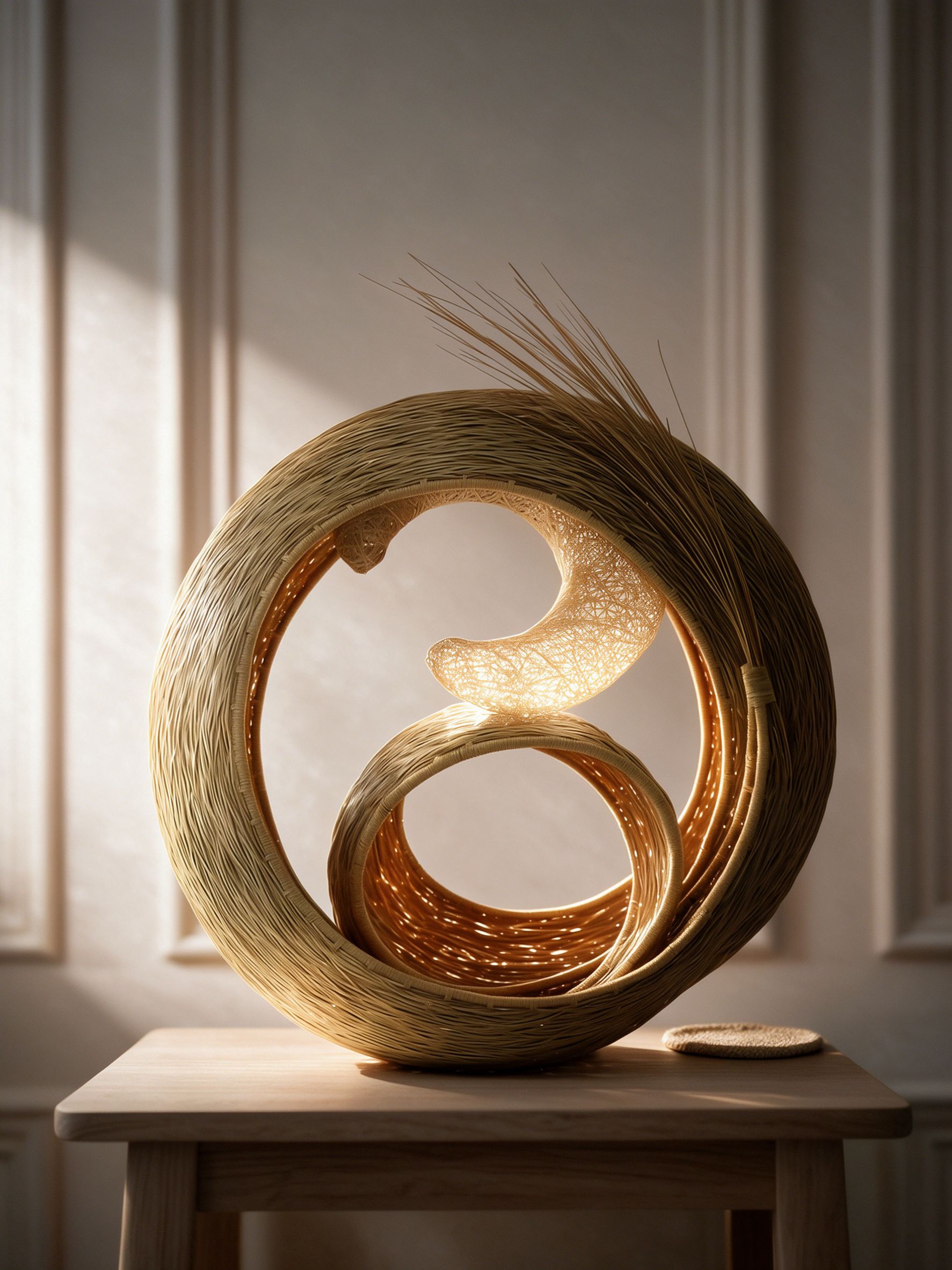
For professional clients, spatial‑creators and material‑enthusiasts, to evaluate real‑world texture, thickness and light‑transmission performance of different grades. Swatchbook includes both natural‑base blanks and powder‑primed blanks for reference.
Request your exclusive material swatch book. Samples are free; only shipping applies (EUR 50 to Europe, shipped from China). Experience light-shadow and texture brought by hand-woven fine-filament bamboo.
Swatchbook holds small‑format reference specimens for project evaluation only. Due to natural‑fibre and hand‑craft variability, minor deviation between swatches and bulk goods may occur. Swatches serve purely for reference and shall not constitute sole‑acceptance‑criteria for bulk‑order‑delivery.