Material Guide · Urushi-Lacquer
Grind-Built Urushi-Lacquer
Layer-formed natural urushi-lacquer substrate with coloured eggshell inlay — Heritage craft from Southwest China
The Finish That Bites Before It Beautifies
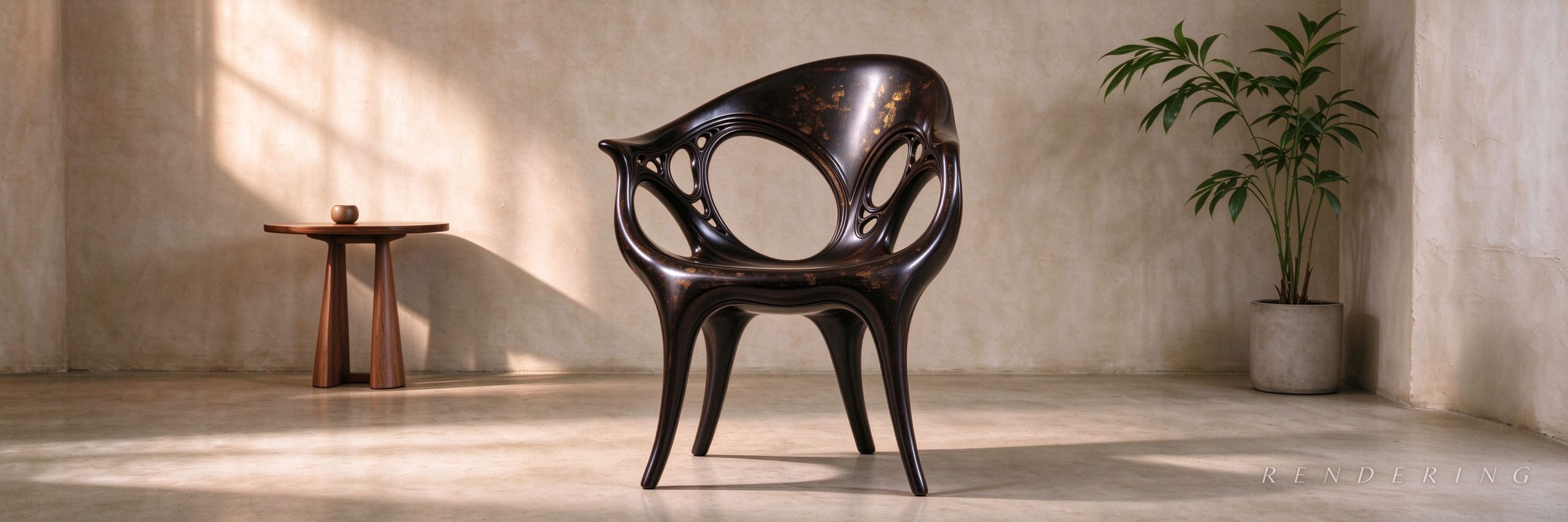
Fresh from the tree, it is dangerous. A single touch of raw lacquer sap can leave the skin blistered and burning for weeks. The Chinese call it "qi yao" — "lacquer bite". This "bite" risk applies only to un-cured raw sap, not the end-product. For the first few days, every lacquer maker works with gloves, long sleeves, and a careful distance. It is not a material that welcomes you.
And then it cures. What remains is one of the hardest, most lustrous, most enduring natural finishes known to human civilisation — a surface so deep it seems to hold light within itself, so durable it can survive two thousand years buried in the earth, so beautiful that empires built their most precious objects around it.
This is urushi-lacquer. In Southwest China, it has been refined into something found nowhere else: a tradition of multi-layer build-up and controlled wet-grinding, paired with coloured eggshell inlay. It transforms potent tree sap into objects of quiet, extraordinary depth. It demands more than seventy-plus steps and months of patience. Every layer cures for at least one full day. Every finished piece is time made visible.
Terminology note: Grind-Built: defining craft — multi-layer colour-lacquer is buried beneath top coats, then wet-ground to reveal embedded interior hues; distinct from high-relief heap-lacquer which creates physical three-dimensional relief. Coloured eggshell inlay (innovated by master Chen Sibi, 1943; distinct from Shen Fu-wen's ground-and-painted lacquer system).
Read the full material specification below to understand its craft background, physical boundaries and real-world project considerations.
Note: Physical swatch samples are not available for this material. Please reference high-resolution macro imagery, cross-section diagrams and completed project case studies for specification evaluation.
.The Place
Southwest China's mist-humid hill regions nurture the lacquer tree (Toxicodendron vernicifluum). Urushi-lacquer cannot dry under direct sunlight; it polymerises via oxidation within humid ambient air — ideal conditions sit between 20-35 °C and 75-95 % relative humidity. This favourable micro-climate fostered a distinguished regional lacquer heritage.
The lineage stretches back at least to the Han dynasty (206 BCE – 220 CE). It flourished between the 6th-10th centuries and underwent critical artistic renewal in the 1930s by artists at the Sichuan Fine Arts Institute, formalising the core Grind-Built technical system. In 1943, master Chen Sibi pioneered the coloured eggshell inlay (innovated by master Chen Sibi, 1943; distinct from Shen Fu-wen's ground-and-painted lacquer system). Today fewer than ten master-level practitioners carry forward this complete hand-craft lineage. This is terroir with a deadline.
While both draw upon Toxicodendron vernicifluum lacquer-sap, this Southwest-Chinese craft lineage prioritises multi-buried colour layers followed by controlled hand-grinding (Grind-Built), yielding a distinctive geological-like cross-section surface texture, differing from the surface-focused decorative approaches of classic Japanese maki-e traditions.
The Craft
Lacquer is not merely painted on. It is built-up layer-by-layer, then ground-back to disclose what lies embedded beneath. Where many crafts operate by additive work alone, Grind-Built urushi-lacquer combines additive and subtractive hand-work; the subtractive grinding step is where the material's unique artistic character emerges.
The process commences with raw sap harvested by fine incisions on lacquer tree trunks, collected on shells or leaves, and filtered through linen cloth. Fresh sap appears milky-grey, rapidly oxidising to black upon air exposure. Ancient lacquer texts note: "The body of lacquer is black." This is material nature, not artistic choice.
A base substrate is prepared — wood, bamboo, or hemp-reinforced cloth-core jia-zhu-tai body — and sealed with successive mixtures of raw lacquer blended with ash or fine clay. Every single coat must cure inside a yin-fang (humidity-controlled shade-curing chamber) for no less than twenty-four hours. Urushi-lacquer cannot be force-dried; heat induces cracking, UV sunlight dulls its gloss. Polymerisation must advance at its own slow, damp-dark pace.
Multi-coloured lacquer coats are applied in successive cycles: each layer cures fully, each surface is sanded smooth before the next coat proceeds. Fine-grade works may carry ten, twenty or even thirty discrete lacquer strata. The greater the layer count, the greater the depth potential.
Then comes the defining grinding phase. Artisans perform wet-grinding using fine abrasives, varying applied pressure locally across the surface. Upper strata abrade away first, unlocking colours buried deeper within the stack. Heavier grinding exposes lower layers; lighter grinding preserves top-coat hues. The final result is not a painted image sitting upon a surface. It is a cross-section of accumulated time — colours originating from within the lacquer matrix, as if latent within the material and only now brought to light. This constitutes the core Grind-Built logic. It must be distinguished from heap-lacquer, which builds physical three-dimensional relief forms.
The second signature innovation is coloured eggshell inlay, created by Chen Sibi in 1943. Inner membrane is stripped from eggshell fragments; shell pieces are pressed into wet lacquer and deliberately crushed. Resulting cracks form spontaneously and randomly, evoking the crackle glaze of ancient Song-era ceramics. Multiple shell tones (off-white, cream, pale blue-green) are deployed. Inlay density plus final grinding pressure define final surface texture. The finished plane shimmers across thousands of micro-fractures catching light at differing angles.
Final polishing and buffing follows, executed with palm-hand rubbing, charcoal or fine polishing oil. The surface achieves mirror-like depth unreachable by synthetic coating systems. Small-format pieces demand around three-months total craft time; large-scale panels may exceed half-a-year from raw sap to finished substrate.
The Character
Grind-Built Urushi-Lacquer possesses qualities difficult to communicate without physical contact.
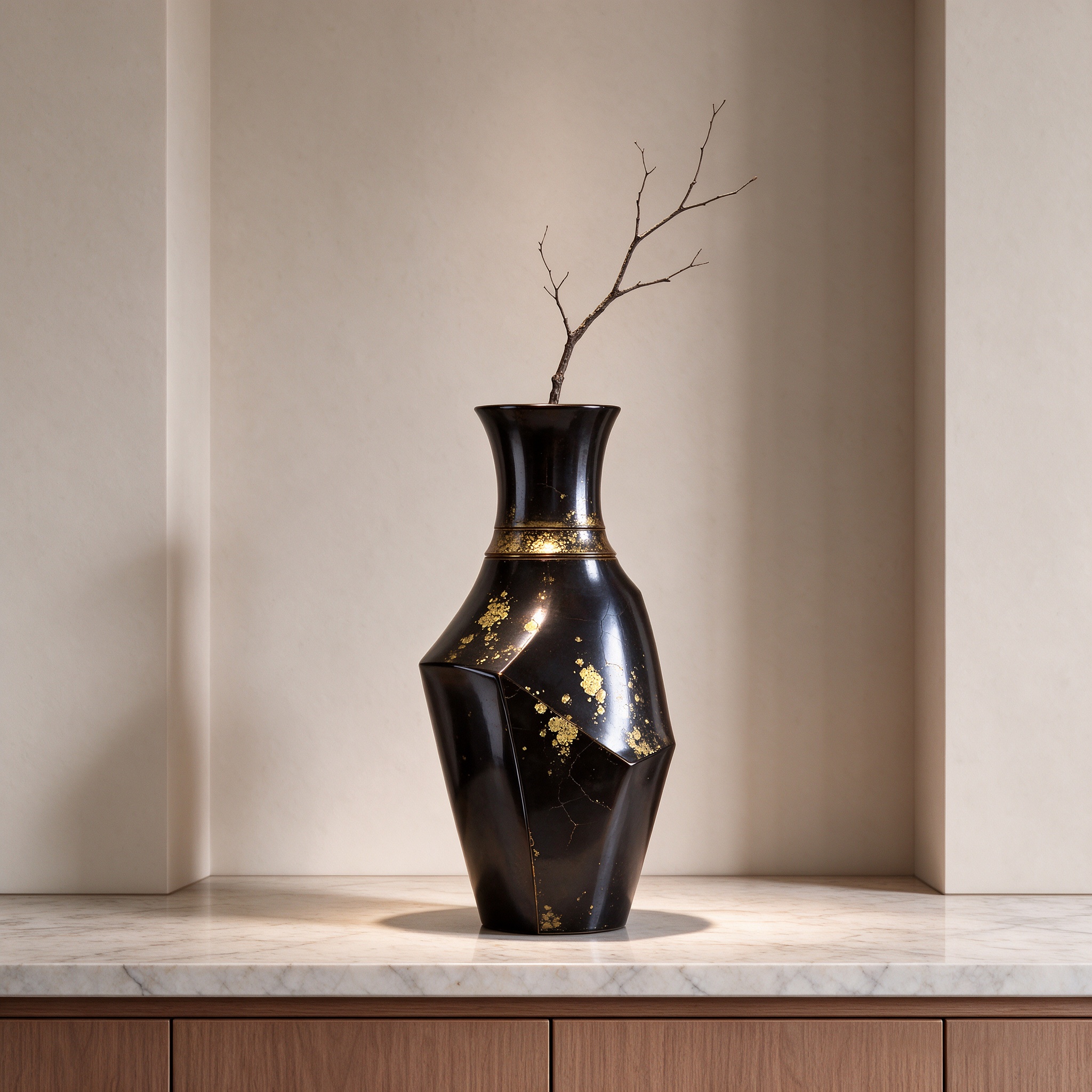
Depth: Not the superficial gloss of varnish or polyurethane, but an interior-seeming depth. Hold black urushi-lacquer towards light: you do not simply see surface reflection; light appears held within the material matrix, like gazing down into still water.
Hardness: Properly polymerised urushi-lacquer achieves Mohs hardness 3-4. Harder than most timbers and many plastics. It demonstrates resistance to acid, alkali, boiling-water and high chemical-corrosion resistance. Archaeologically-excavated lacquer artefacts two-thousand-years-old survive intact and glossy underground. This material outlasts ordinary wear.
Thermal-touch warmth: Despite its hardness, it feels warm against human skin — unlike cold ceramic or metal; it adapts to hand temperature, similar to timber or leather.
Restrained expressiveness: It does not shout. Colours are rich yet restrained; textures reveal themselves selectively under shifting light. Egg-shell crackle emerges only under particular viewing angles; Grind-Built buried-colour effects transform as you rotate the panel. It rewards sustained observation and does not surrender all detail at first glance.
Age-improving behaviour: Well-used pieces develop deeper patina, softer glow and more intimate tactility over decades. Peak character is not reached when brand-new; its material life only truly begins upon completion.
What It Does That Nothing Else Can
One of humanity's hardest available natural surface finishes (Mohs 3-4), resisting acid, alkali, heat and high chemical-corrosion resistance; unmatched durability among organic coatings.
Grind-Built cross-section depth: controlled grinding through multi-buried lacquer strata reveals interior-embedded colours; imagery exists within the substrate rather than sitting atop a painted surface.
1943-origin coloured eggshell inlay: spontaneous ceramic-like crackle texture unique to this Southwest-Chinese craft lineage.
Transformative material narrative: originating from potent skin-irritant tree sap, evolving into stable, luminous long-lived finished substrate.
Visible temporal footprint: each lacquer layer requires minimum 24-hour yin-fang shade-curing. A thirty-layer piece embeds thirty-plus days of quiet craft labour within its finished surface.
The Temperament
Grind-Built Urushi-Lacquer is demanding; it does not forgive careless handling or rushed workflows.
Polymerisation depends upon stable humidity inside shade-room conditions; excessive dryness prevents curing; excessive heat provokes cracking. The yin-fang humidity chamber is not convenience-equipment, it is process necessity.
Not suited for prolonged direct-sunlight exposure; UV radiation will gradually diminish surface gloss across decades. Intended strictly for interior environments with gentle ambient lighting.
Dishwasher-grade detergents and sustained hot-water immersion will degrade finish quality. Care consists of soft dry-cloth wiping only. It requires comparable gentleness to the care invested during manufacture.
Natural hand-process variance persists. Identical pigment recipes, layer counts and grinding protocols will never yield two absolutely-identical pieces. Day-to-day shade-room humidity, artisan grinding pressure all leave subtle traces. These variations are manufacturing signatures of living hand-craft, not defects.
What It Can Become
Urushi-lacquer is not confined to trays and decorative vases. Possible applications include:
- Tableware: bowls, plates, chopsticks — warm deep surface enhances food presentation; dense non-porous finish delivers practical performance for daily-use objects.
- Jewellery & small accessories: beads, pendants, bracelets; depth-of-colour plus eggshell micro-crackle light-catching effects produce singular luxury artefacts.
-
Lighting components: lacquer lamp-shades emit deep-toned warm glow reflected softly from the lacquer surface; black urushi-lacquer absorbs and slowly releases ambient light.
- Furniture & architectural surfaces: tabletops, screens, wall-panels; combining visual depth with high mechanical durability for heavily-touched design surfaces.
- Contemplation-oriented objects: small boxes, brush-rests, paper-weights; hand-held pieces inviting prolonged quiet observation.
Limitation comes only from preconception that urushi-lacquer belongs exclusively inside museum showcases.
Important operational note: Physical swatch samples are not available for this material due to multi-month production cycles and extremely high unit cost. Project evaluation relies on high-resolution macro imagery, cross-section diagrams and finished case-study references.
Material Pairing Possibilities
Grind-Built Urushi-Lacquer + Hand-Woven Ramie Bast (Xiabu): hard polished lacquer contrasted against soft textured bast-fibre substrate; multi-month layered craft versus day-scale woven work. Both carry clear hand-maker signatures within their surfaces.
Grind-Built Urushi-Lacquer + Bamboo Filament Weave: deep high-gloss lacquer paired with translucent matte hand-woven bamboo filament; dialogue between reflective-surface and light-diffusing-surface.
Grind-Built Urushi-Lacquer + Natural Bark Cloth: refined multi-month-processed lacquer set against beaten forest-fibre sheet; both originate from biologically potent raw-tree-materials transformed through exhaustive hand-craft into finished design-grade substrates.
The Invitation
If you are a co-creator, maker or creative drawn to surfaces that carry visible traces of time; who seeks to specify a substrate transformed from potent tree-sap into highly-durable luminous finish, built-up layer-by-layer then ground-back to unlock buried interior colour; whose production spans months and whose aesthetic matures across decades — we welcome your collaboration.
We supply finished Grind-Built Urushi-Lacquer substrates produced from Southern-Chinese lacquer-tree raw sap; we operate humidity-controlled yin-fang shade-curing facilities where every coat cures for no less than one day. Our master artisans control grinding pressure to selectively reveal embedded strata, and execute the rare 1943-origin coloured eggshell-inlay technique, preserved by a dwindling circle of master-level practitioners.
Important operational note: Physical swatch samples are not available for this material due to multi-month production cycles and extremely high unit cost. Project evaluation relies on high-resolution macro imagery, cross-section diagrams and finished case-study references.
What remains open is your creative concept.
Review our Creator-Journey documentation to understand collaboration workflows, then submit sketches, technical enquiries or creative curiosity. We manage the craft execution.
Grind-Built Urushi-Lacquer. Sap transformed. Layers enduring. Time made visible.
Work with this material
Two paths, one material.
Create with it — or bring it into your hands.
01 — CO-CREATION
Co-create with Urushi-Lacquer
Bring a concept and the community decides. If it reaches 100 votes, our artisans prototype it — and you earn 20% on every piece sold, for life
Co-Creation Studio · voting opens for every project
02 — ENQUIRE & SOURCE
Enquire about the material · Source finished substrate
Evaluate through macro imagery and completed case studies, or source finished substrates for your studio, collection or project.
No physical samples · reference library by request
Full Technical Specification (TDS)
The complete Technical Data Sheet is delivered as a downloadable PDF and remains the authoritative document. The chapters below reference its content for on-page orientation.
1. Material Origin & Botanical Background
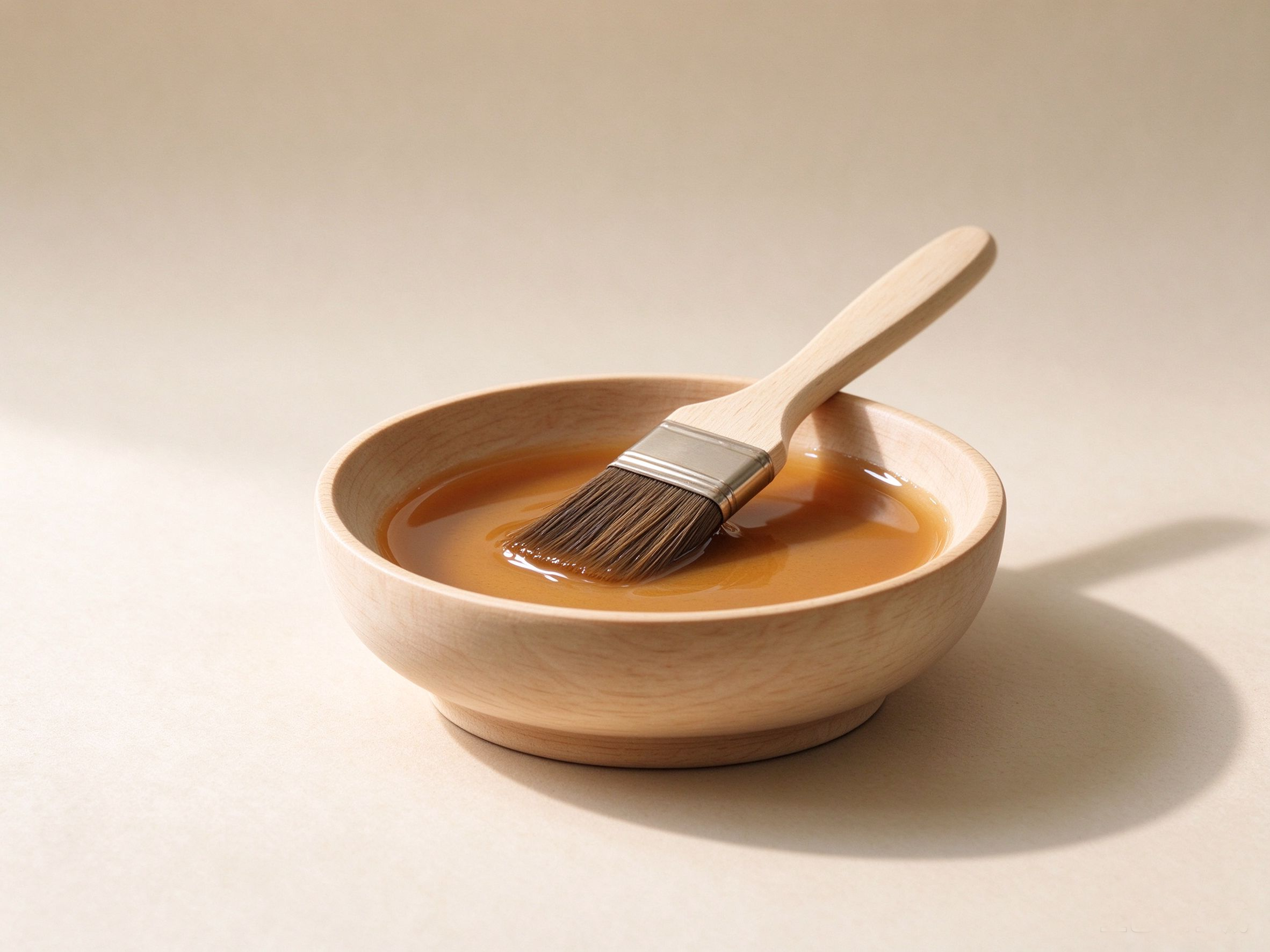
Botanical source: Toxicodendron vernicifluum. Hand‑crafted Grind‑Built urushi‑lacquer substrate, originating from Southwest‑Chinese lacquer‑craft heritage. Core defining techniques: multi‑layer lacquer build‑up plus controlled wet‑grinding (Grind‑Built); coloured eggshell inlay (1943‑origin innovation by Chen Sibi, distinct from Shen Fu‑wen’s ground‑and‑painted lacquer system). Distinct from high‑relief heap‑lacquer craft. Finished substrate only; AURLUME never supplies un‑cured raw lacquer sap.
Operational note: No physical swatch samples are provided for this material. Specification reference: high‑resolution macro imagery, cross‑section diagrams and completed project case‑studies.
2. Material Performance Parameters
- Surface hardness (fully-cured): Mohs 3-4
- Properties: acid-resistant, alkali-resistant, boiling-water-resistant, high chemical-corrosion resistance.
Note: For food-contact end-uses, finished articles must pass third-party food-safety compliance testing according to regional requirements (e.g. EU 1935/2004). Fully-cured natural urushi-lacquer can achieve food-safe performance upon successful certification.
-Curing environment requirement (manufacturing phase): 20-35 °C / RH 75-95 % inside yin-fang (humidity-controlled shade-curing chamber)
‑ End-use restriction: Interior-use only; not for outdoor installation. Prolonged intense UV exposure will gradually degrade gloss.
‑Recommended maintenance: dry soft-cloth wiping only; no dishwasher-grade detergent, no sustained hot-water soaking.
Compliance note
Raw urushi‑lacquer sap (processing‑stage material) contains urushiol, a potent skin‑sensitising allergen. The material offered by AURLUME refers only to fully‑cured final substrate / finished articles, where urushiol has undergone complete polymerisation. Un‑cured lacquer sap is never supplied to clients. For food‑contact applications, third‑party food‑safety testing shall be completed in accordance with local market requirements prior to specification.
Physical note
Fully‑cured Grind‑Built Urushi‑Lacquer delivers high surface hardness (Mohs 3‑4). Prolonged intensive UV‑light exposure will gradually dull the finish. Material is for interior use only; not suitable for outdoor installation. Avoid harsh dishwasher‑grade detergents, hot‑water soaking. Surface maintenance requires only soft dry‑cloth wiping.
Tolerance note
Due to multi‑layer manual lacquer‑application, humidity‑chamber curing, hand‑grinding and egg‑shell inlay craft, subtle surface nuance, colour depth and crackle‑pattern variation are inherent hand‑craft characteristics, not manufacturing defects. No two pieces will be absolutely identical.
Safety / Handling
Raw lacquer sap during‑processing contains urushiol skin‑sensitiser. Supplied finished Grind‑Built Urushi‑Lacquer substrate has undergone full polymerisation curing; no free urushiol remains within the cured finish. AURLUME never supplies un‑cured raw lacquer sap. Professional installation handling is recommended.
3. Application Scope Grading
- Furniture & architectural-surface substrate: table-tops, wall-panels, screens
- Lighting-component substrate: lamp-shades, light-reflective panels
- Object-grade substrate: tableware, jewellery, boxes, paper-weights
- Art-installation substrate: lacquer-art panels, mixed-media composite work
Process-limitations: Interior-use only. Manual-craft variance applies; no absolute visual repeatability between individual pieces. Multi-month lead-time for custom commissions; physical swatch samples are unavailable.
4. Acceptance Criteria
- Subtle variance of colour‑depth, surface micro‑texture, egg‑shell crackle distribution belong to hand‑craft inherent characteristics, not manufacturing defects.
- Minor traces originating from manual grinding / polishing workflow are not quality‑failure.
- Outdoor‑environment performance is outside material specification scope.
- Pre‑project confirmation: evaluation is based on imagery / case‑studies; no physical swatch reference.
5. Care & Maintenance Instructions
‑ Deploy and store within dry indoor ambient‑light conditions; avoid continuous strong‑UV sunlight.
‑ Only use clean soft dry‑cloth for dust‑removal. Do not apply liquid detergent, hot‑water soaking, dishwasher‑washing.
‑ Protect against sharp‑hard scratching impact.
6. Material Documentation Project Considerations
On request for selected production‑batches: craft‑heritage statement, process‑declaration, existing third‑party test‑reports. For hospitality, contract and public‑sector projects, fire‑safety, stain‑resistance, chemical‑compliance and end‑use‑suitability shall be reviewed prior to specification. Food‑contact usage requires separate local third‑party food‑safety validation.
Operational reminder: No physical swatch samples can be provided.
7. Swatch service note
No physical swatch‑book / physical specimen service is offered for Grind‑Built Urushi‑Lacquer. Multi‑month craft cycles and very high unit cost make conventional sampling unfeasible. Co-creators evaluate material properties via high‑resolution macro‑photography, layer‑cross‑section diagrams and completed real‑world project references. Please enquire for access to reference asset library.