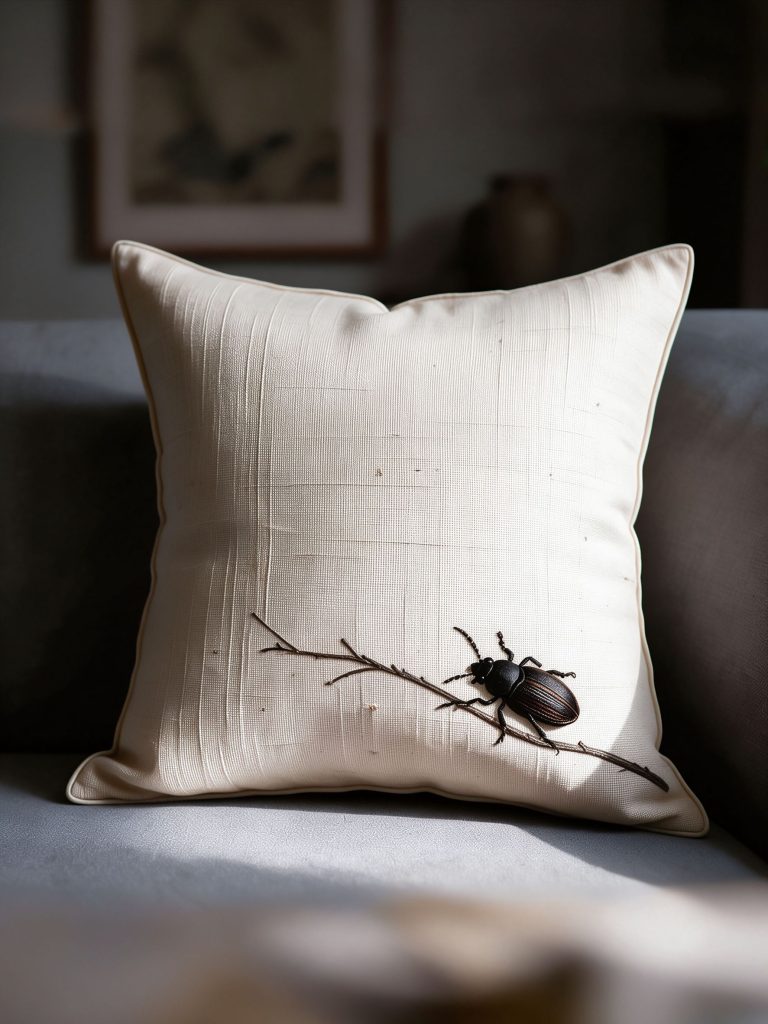
Material    HAND-WOVEN RAMIE BAST     →Co-creator    XIAOHONG LIAO, SOUTHWEST CHINA 


Shu Embroidery: A Ramie Panda Cushion

A first-person account of a Shu-embroidered panda on hand-woven ramie bast — how the silk splits, how the stitch settles, and what the cloth keeps.

By XIAOHONG LIAO · Diaries

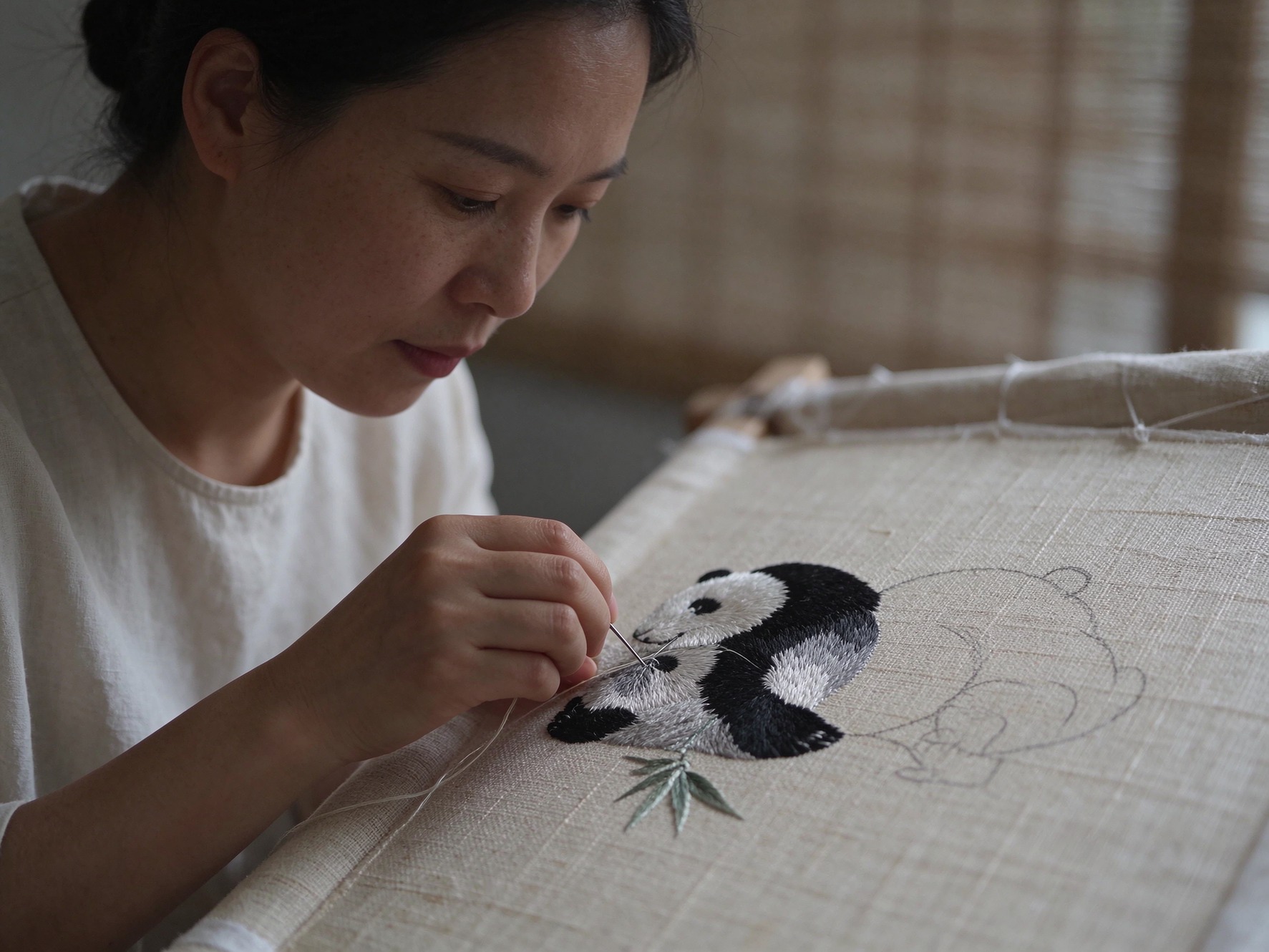
Shu embroidery is usually seen on satin, stretched tight on a frame, worked into a full scene of flowers and birds. I have held a frame since I was sixteen; it was my family's trade. My work sits differently: I stitch small animals onto ramie - the plain, dry summer cloth of southwest China - and each one stays in a corner.

The Silk Thread

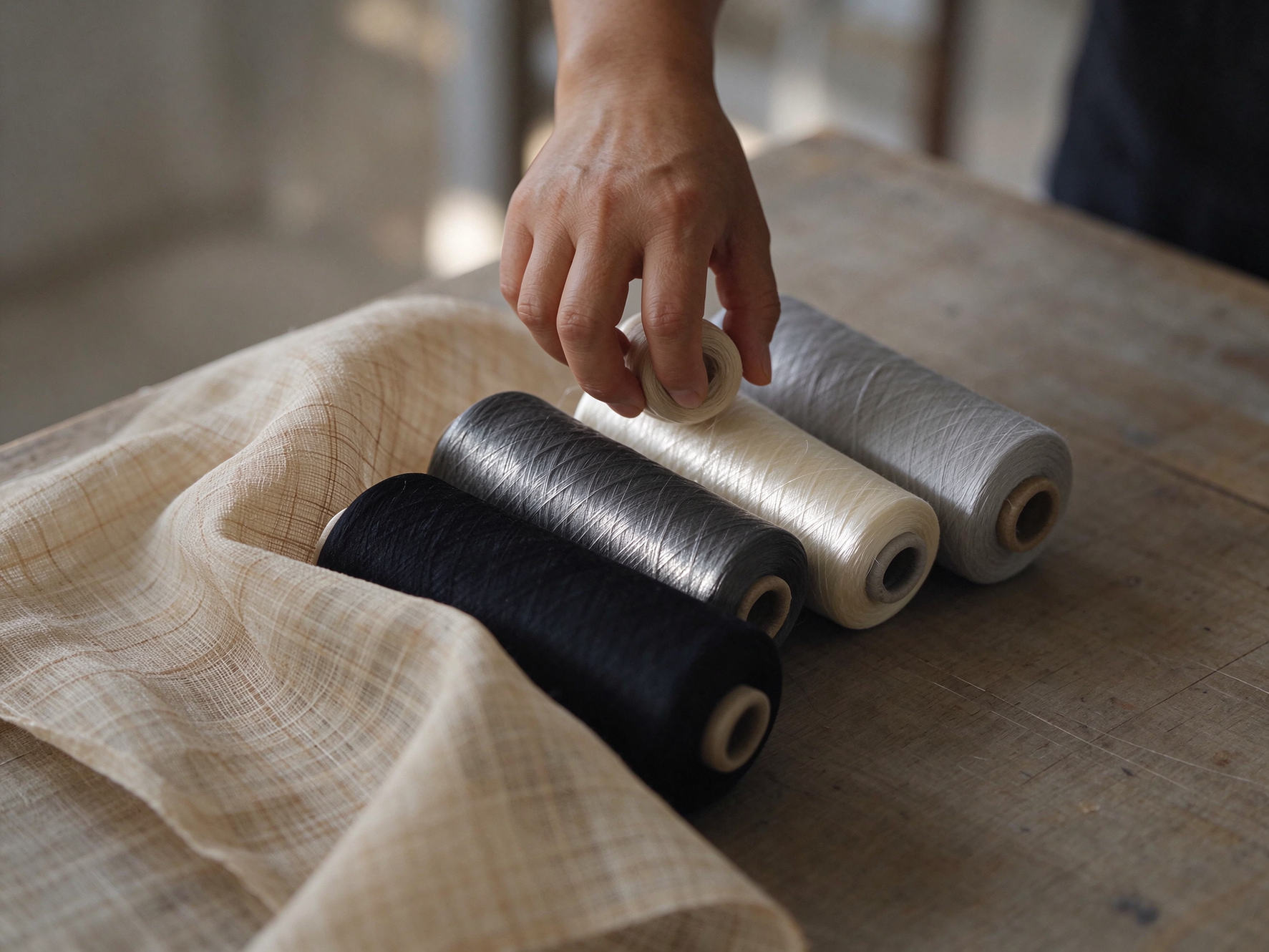
The material I work with is silk thread, split finer by hand. Two readings of it sit on my frame: a looser, softer thread for broad tones, and a finer, tighter silk for outlines and detail. Traditionally Shu embroidery takes a locally woven satin as its ground; the silk lies smooth on that surface. Ramie is coarser and matte, with its own plain weave showing through, so the thread does not sink into a glossy face. It rests on the weave, plainly.

The Stitch

Shu embroidery was entered onto China's first national intangible cultural heritage list in 2006. It is known for its stitches - grouped into twelve categories, with around thirty in regular use. The one I return to most often is the gradation stitch, which shades one thread into the next and gives an insect's wing or a shell its soft transition. Alongside it I use laying, blending, rolling and sand stitches to set the outline and fill the body. The result should read as even stitch ends, an even thread sheen, tight yet soft. Colours are kept elegant rather than bright; the subjects are small birds, insects and fish, drawn gently and clearly. On ramie I keep the stitch smaller and sparser than on satin, so the cloth keeps its body.

The Pieces

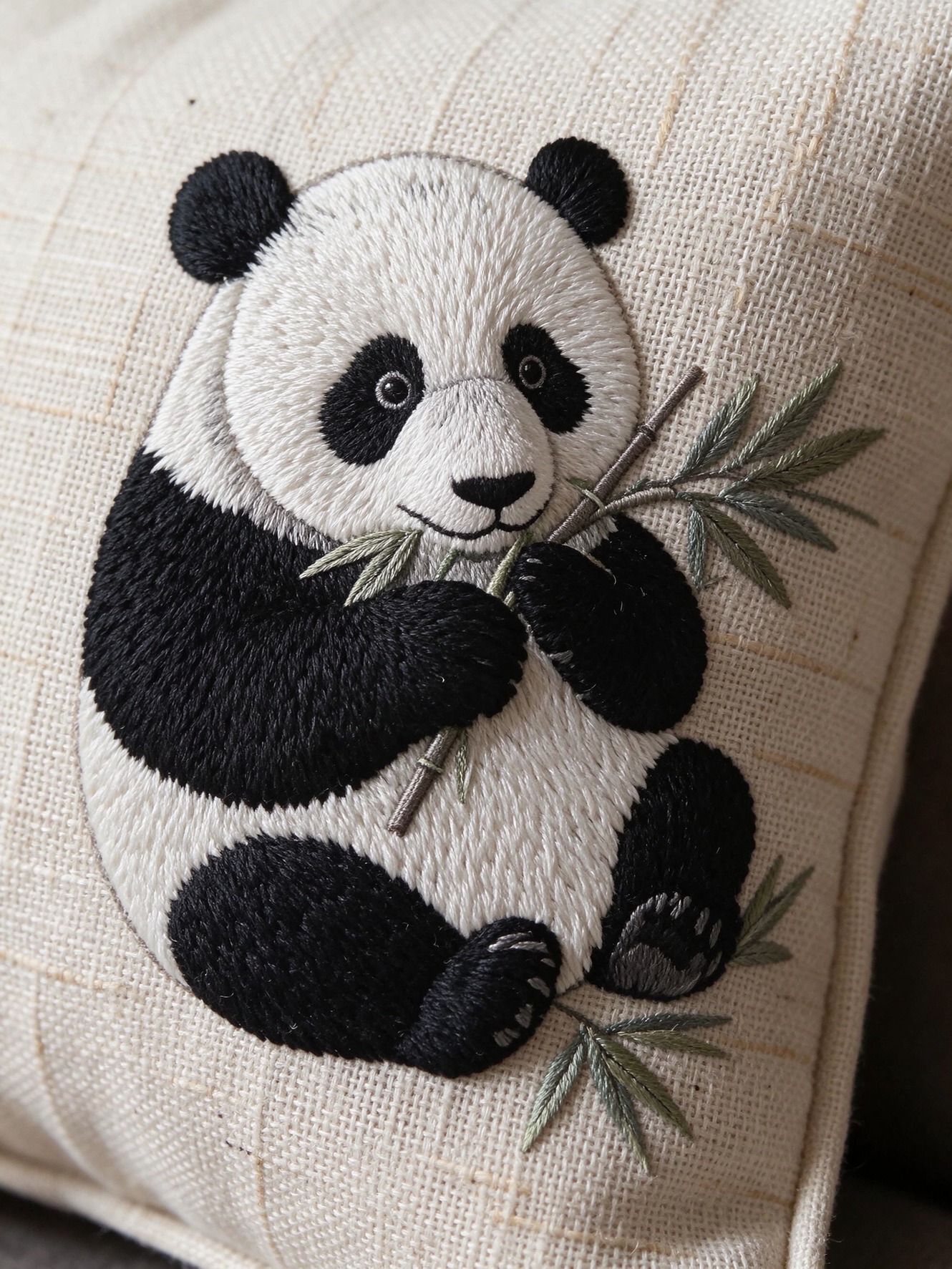
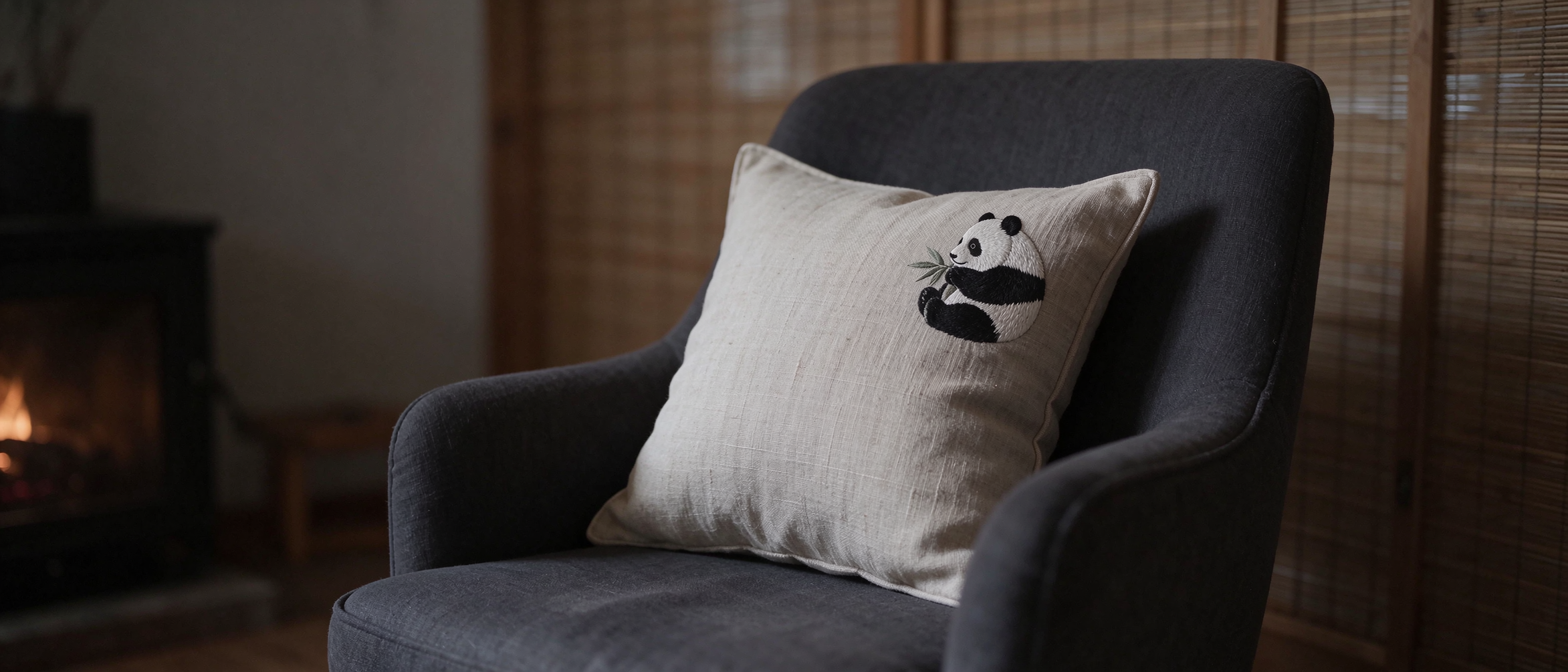
The panda is an animal native to the mountains of southwest China, and it has long been a traditional subject of Shu embroidery.

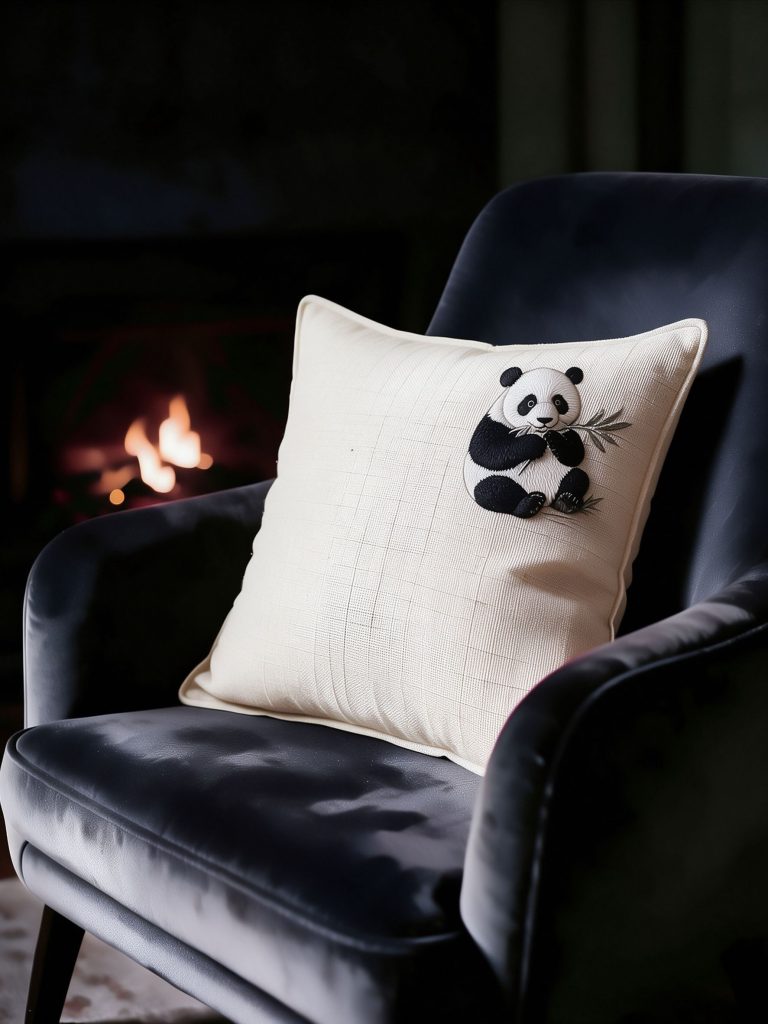
One ramie cushion has come out of the studio. The panda is worked in soft black and grey with a little muted green bamboo, kept to one side of the plain ramie cloth. It settles quietly into a home.

The embroidery is a note to the cloth, not a picture laid over it. The ramie keeps its weave and its natural colour; the stitch stays in the corner. That is where the work lives.
Explore

See the Hand-Woven Ramie Bast material guide, or view the ramie panda cushion.


Pieces in this diary

These pieces will later link to their product page; the route is reserved now, no live link yet.


Other works by this co-creator

More objects brought to life by the same hand, shown in the creation wall.