MATERIAL — NATURAL BARK CLOTH
No weave, no dye, no chemical finish. From the inner bast of the upas tree (Antiaris toxicaria) — whose latex is toxic on contact with an open wound — Yunnan makers remove every trace of sap through soaking and repeated rinsing, then felt the long fibres into one continuous sheet.
Posted by AURLUME Editorial · Field Note
01 — Select and Strip
Select and Strip
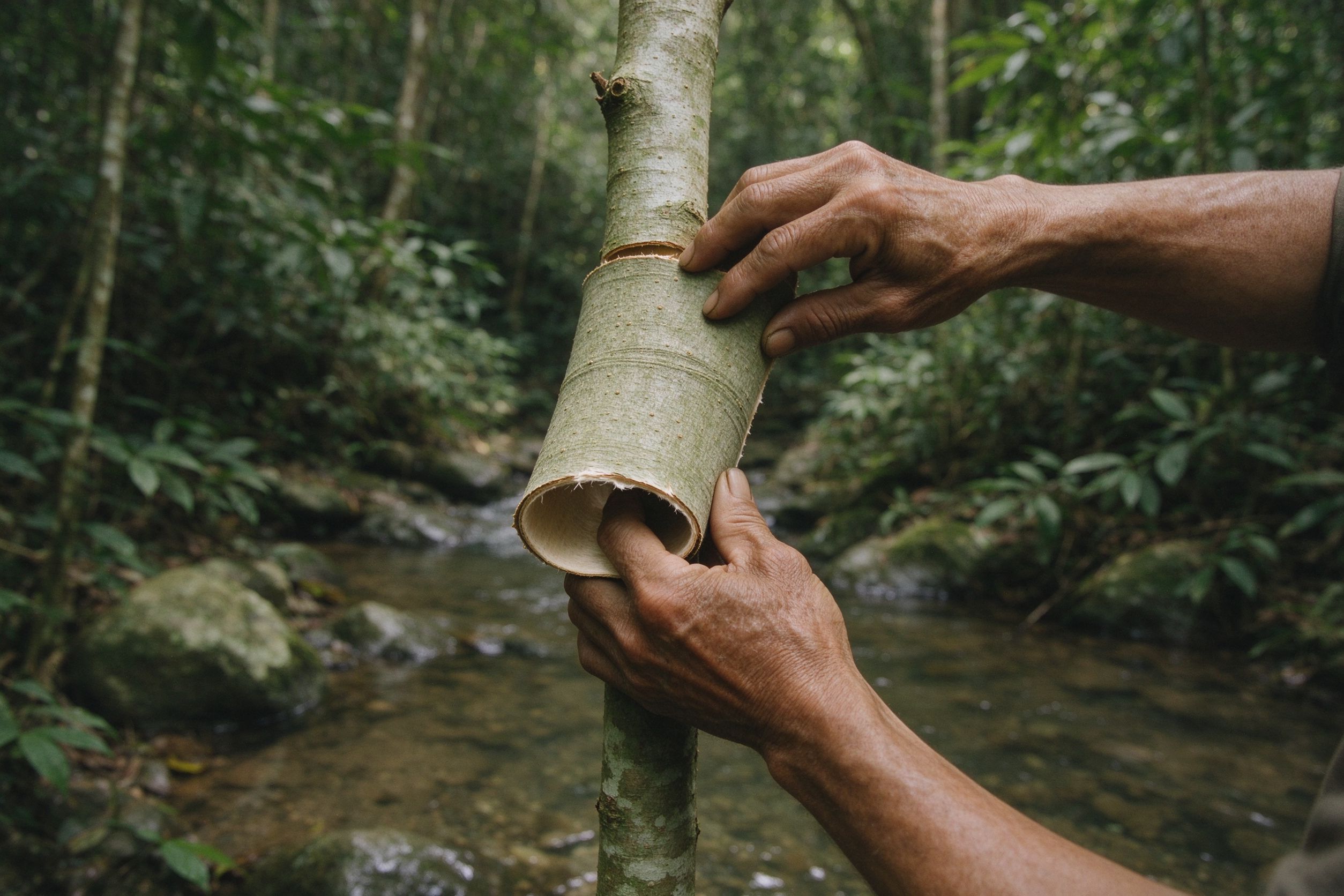
In the rainforest of southern Yunnan — Xishuangbanna, the Ailao Mountains and the border hills shared with Laos and Myanmar — Hani, Dai and Lahu makers harvest the inner bast of the upas tree (Antiaris toxicaria). Only branches are taken, never the whole tree; the bark is ring-cut and lifted whole while it holds moisture, kept intact so the fibre stays long.
02 — Soak and Detoxify
Soak and Detoxify
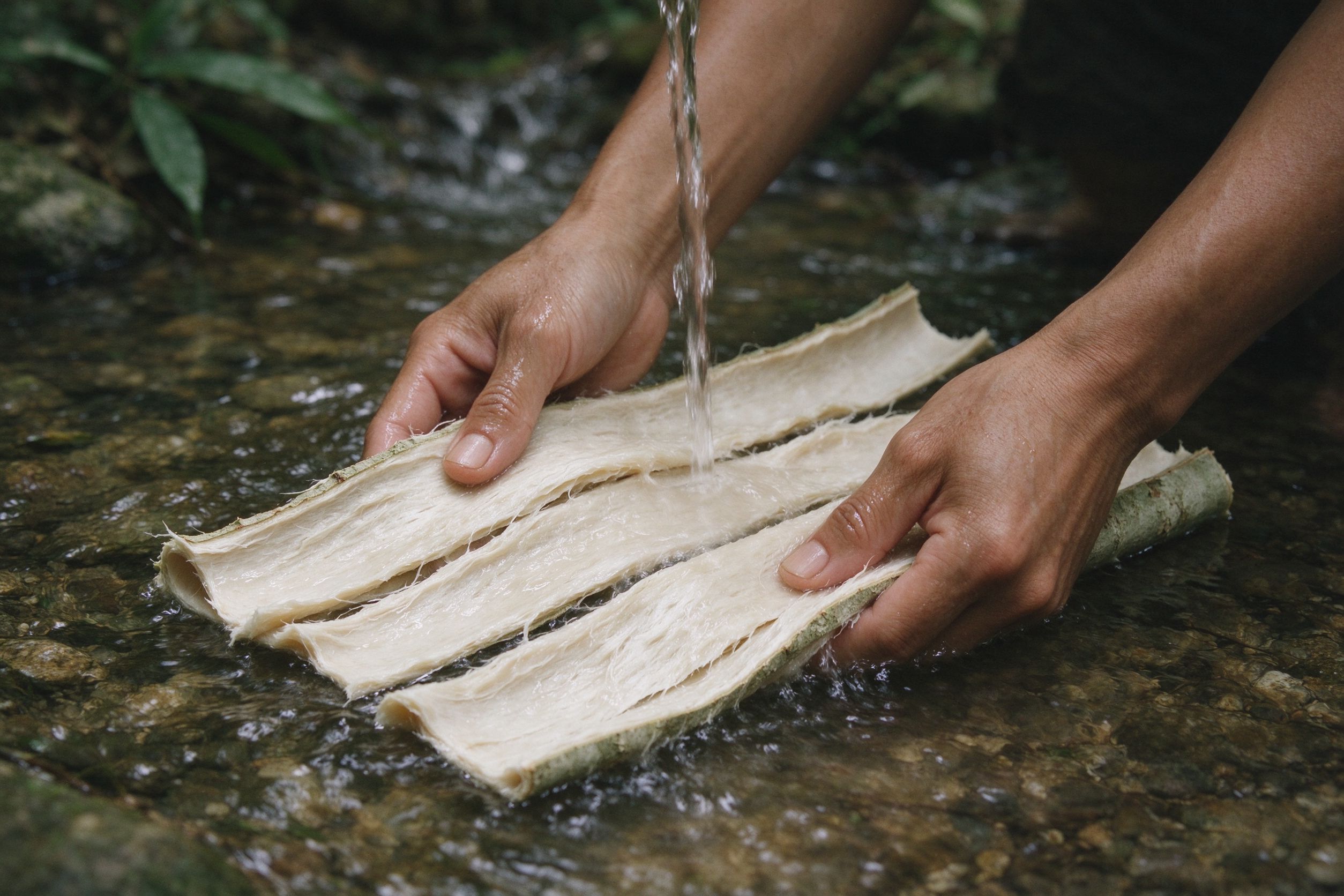
The bark soaks in running water for weeks, the water changed often, until the toxic latex and soluble compounds are washed out; this detox rinse is the decisive step — unrinsed raw bark is never supplied. Unused bast is kept damp so it never dries hard.
03 — Beat and Felt
Beat and Felt
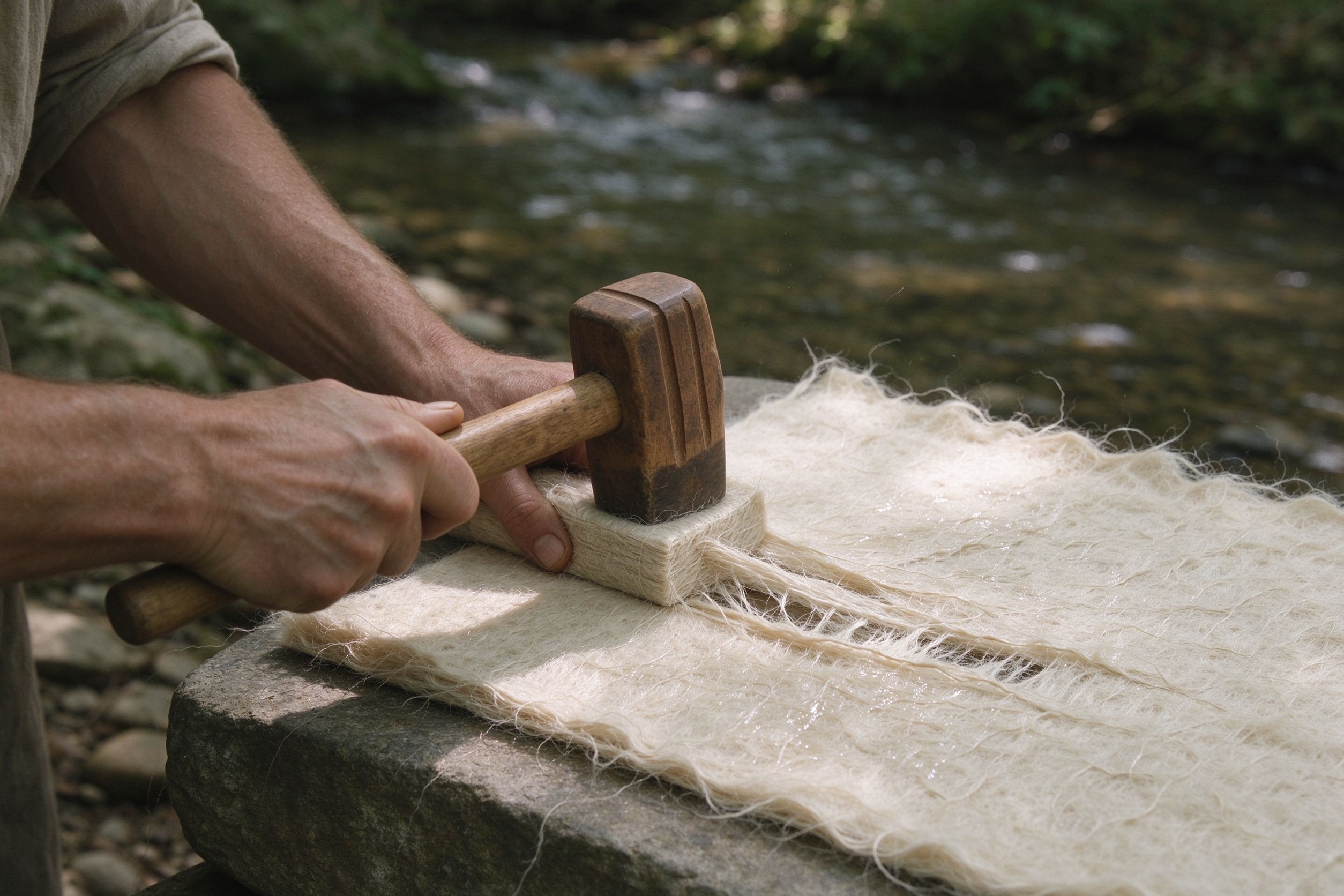
On a flat stone or wooden anvil the bast is struck evenly and repeatedly with a grooved wooden mallet — never iron — which breaks away the outer skin, separates residual impurities and spreads the long fibre thin and wide until it interlocks into a single non-woven sheet. The opened sheet is rinsed again until no sap remains.
04 — Stretch and Dry
Stretch and Dry
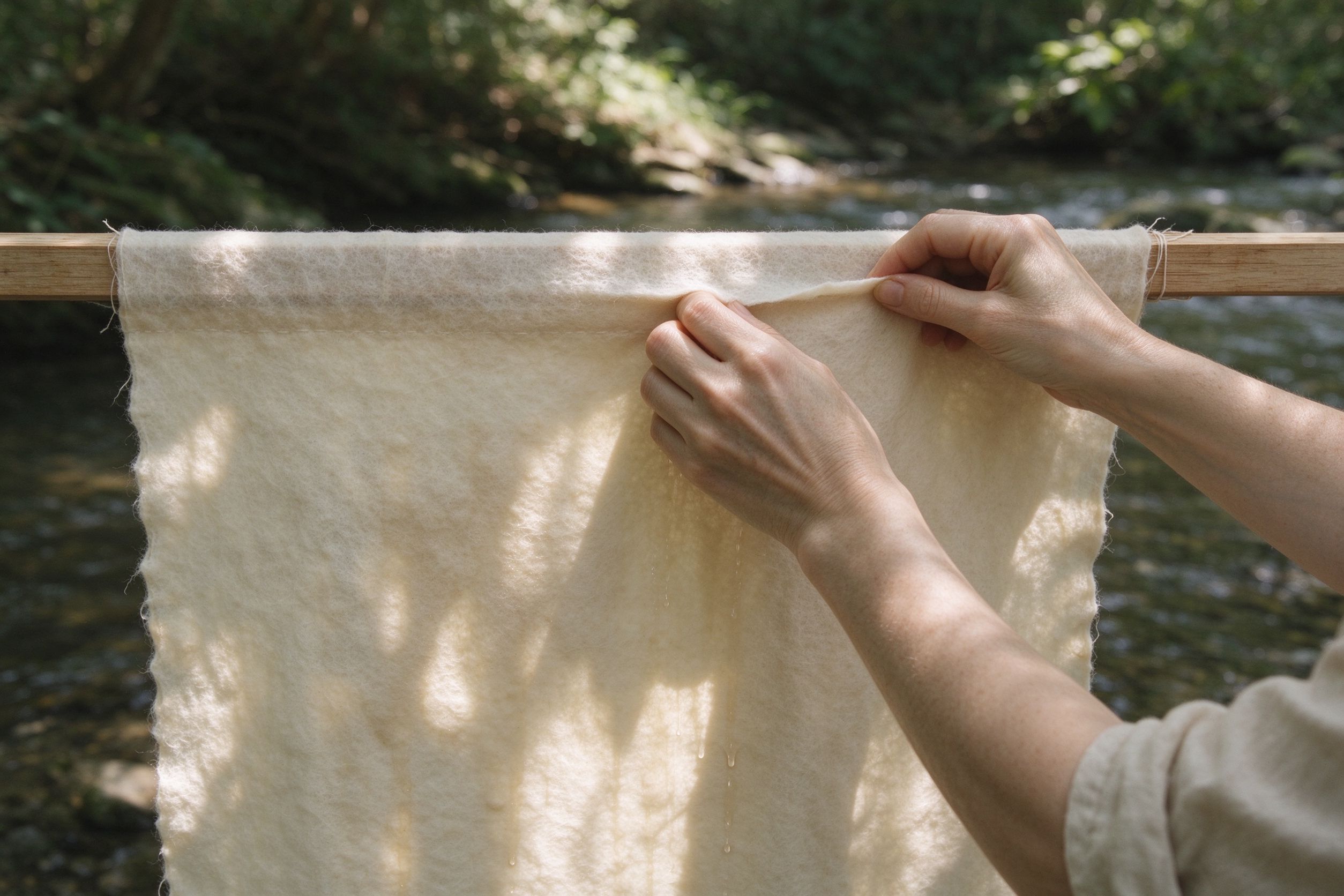
The sheet is stretched on a frame, thick spots thinned and thin spots filled; as it drains it shrinks, so it is pulled level by hand at intervals before shade-drying away from direct sun. A final light beating loosens the fibre into a matte, milk-cream sheet — soft inside, firm outside, breathing and damp-resistant.
Bark cloth in light, medium and heavy gauges is set out on the material guide; the pieces made with it appear under Co-Creations.
Works made with this material
Objects built on natural bark cloth, shown in the creation wall.
To provide the best experiences, we use technologies like cookies to store and/or access device information. Consenting to these technologies will allow us to process data such as browsing behavior or unique IDs on this site. Not consenting or withdrawing consent, may adversely affect certain features and functions. View our Privacy Policy, Cookie Policy and review your data subject rights.