Material Guide · Natural Bark Cloth
Natural Bark Cloth
Antiaris toxicaria, known as the Upas-tree, yields a milky latex which is powerfully toxic upon open wounds. Yet from this very tree, ethnic communities of Yunnan have created one of humanity's oldest non-woven fibre sheets.
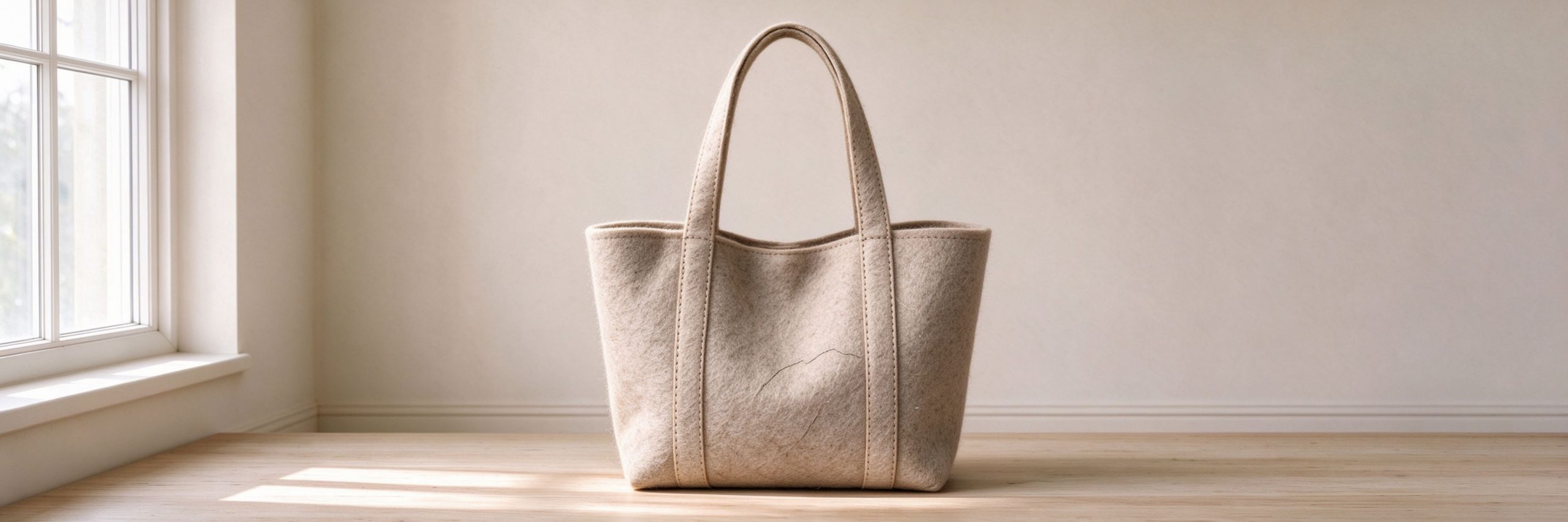
This is not a paradox, it is a craft of transformation. Weeks‑long running‑water soaking, repeated rounds of beating, and thorough rinsing remove all traces of hazardous sap. What remains is a warm grey-beige, supple, breathable non‑woven sheet: built to last through regular daily use, soft to the touch in its lighter grades, and lightweight for warm tropical climates. For generations, Hani, Dai and Lahu peoples of southern Yunnan have preserved this heritage. Natural Bark Cloth stands as a living fossil of pre‑loom fibre processing technology.
At AURLUME we treat Natural Bark Cloth not as an exotic curiosity, but as a complete hand‑transformed forest‑derived substrate. Every sheet bears unique marks from the tree's growth and the artisan's mallet. Thickness, texture and tonal nuance cannot be perfectly standardised. Its material character evolves further with handling and use.
In practice
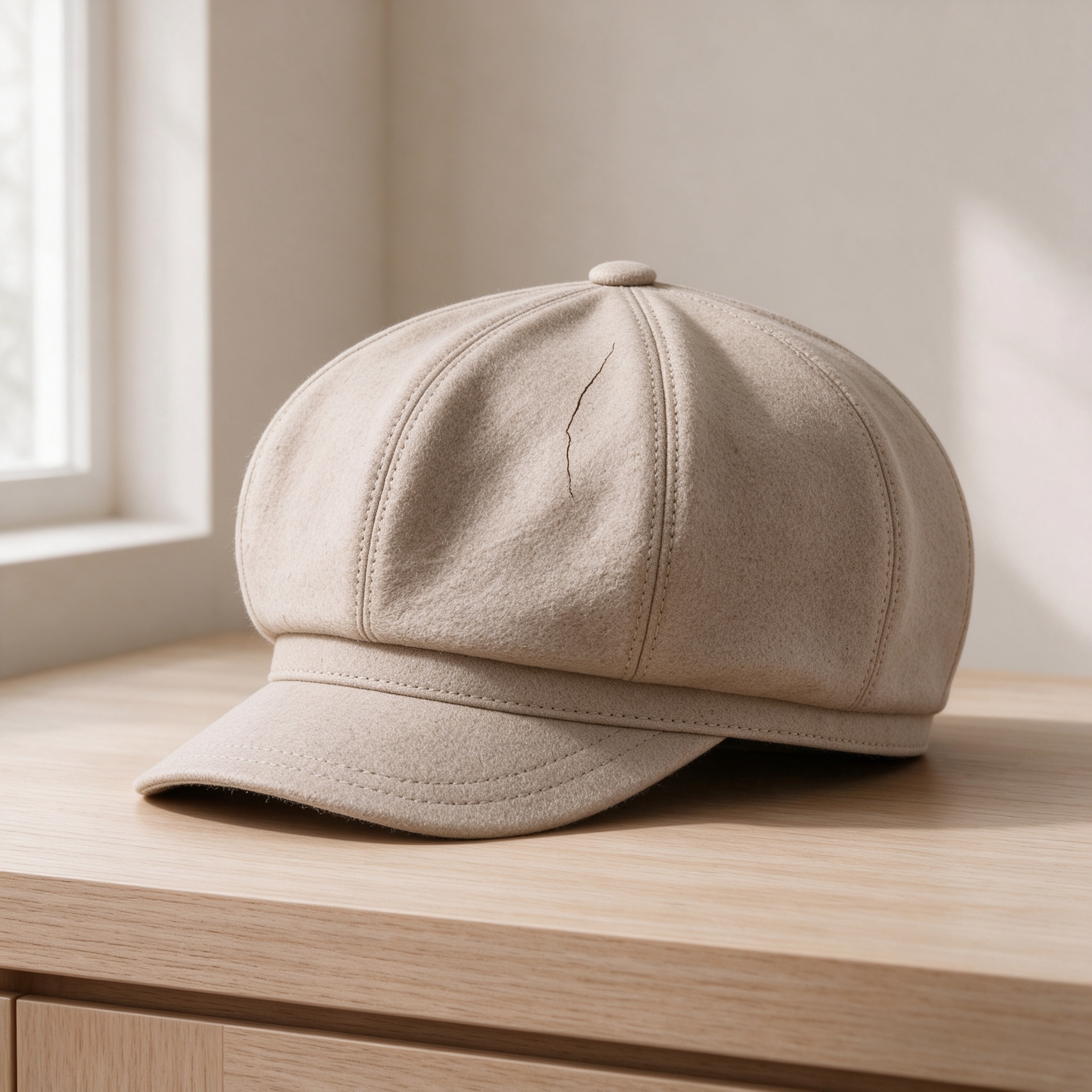
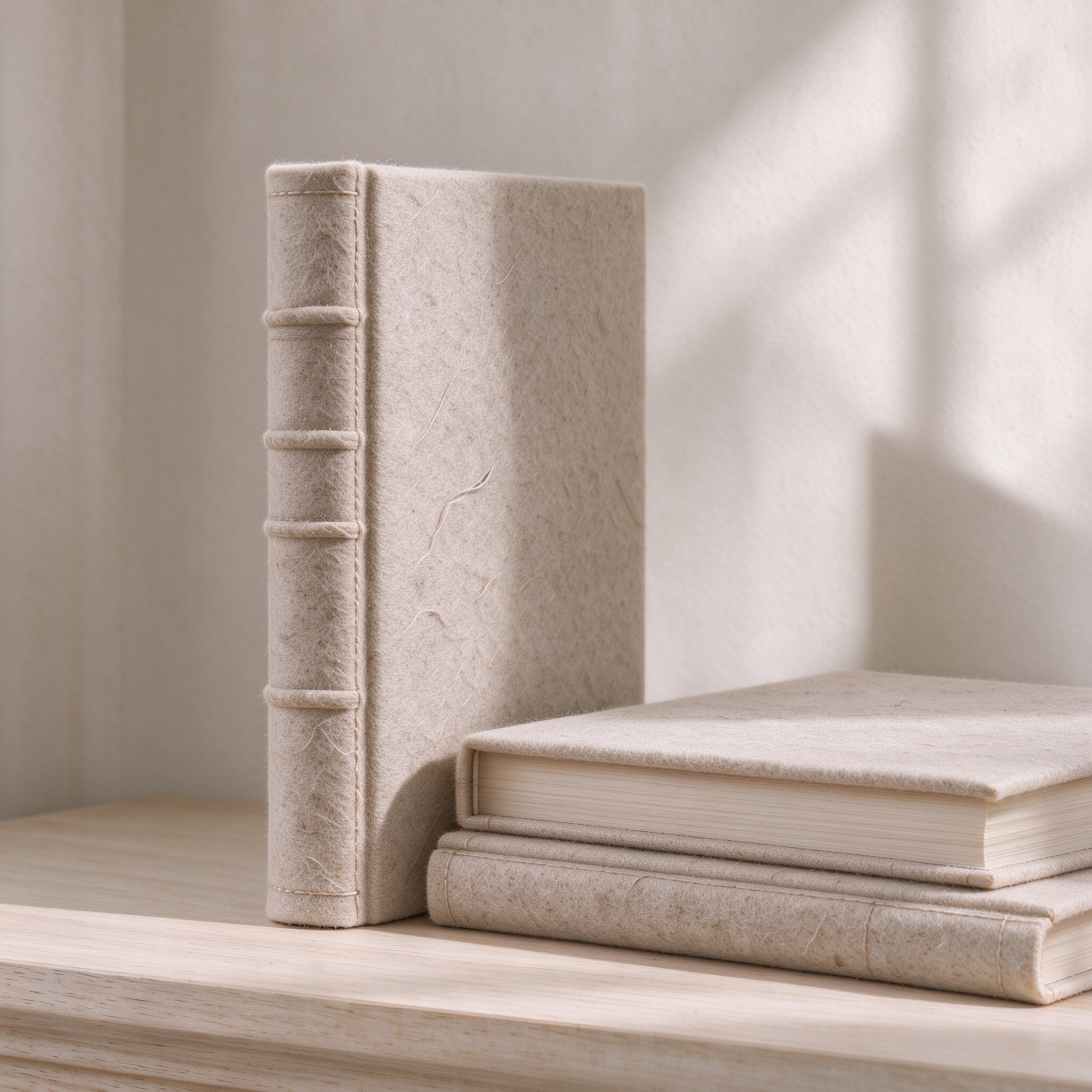
Our applications range from upholstery and wall-covering to lighting substrates, artistic apparel-adjacent pieces and luxury bookbinding. Different thickness grades and optional surface treatments deliver varied tactile and visual outcomes. Read the full material specification below to understand its craft background, critical safety boundaries and real-world project considerations.
Work with this material
Two paths, one material.
Create with it — or bring it into your hands.
01 — CO-CREATION
Co-create with Bark Cloth
Bring a concept and the community decides. If it reaches 100 votes, our artisans prototype it — and you earn 20% on every piece sold, for life.
Co-Creation Studio · voting opens for every project
02 — ORDER & SOURCE
Order samples · Source the material
Feel its supple, felt-like softness first, or source sheets for your own studio, collection or project.
samples free; shipping applies (EUR 50 to Europe, shipped from China)
Source raw material→
for co-creators, studios & production batches
Full Specification
Nine chapters — from botanical origin to project care.
1. Material Origin & Botanical Background
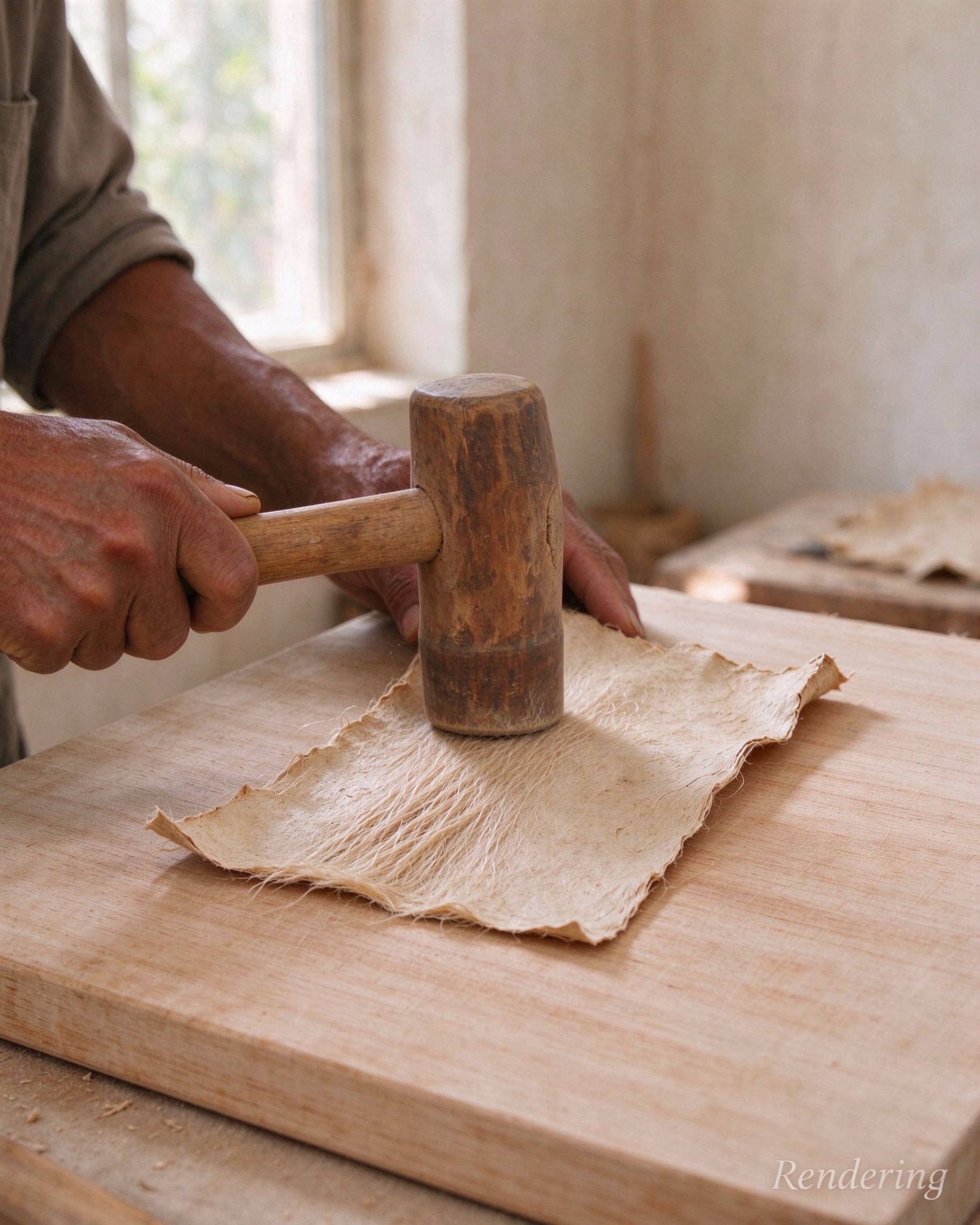
AURLUME Natural Bark Cloth is handmade from inner bast fibre of Antiaris toxicaria (Upas‑tree / Arrow‑poison tree), harvested from rainforest zones of southern Yunnan: Xishuangbanna, Ailao Mountains and Sino‑border mountain areas.
Critical botanical & safety note: Raw fresh tree latex contains potent cardiac glycoside antiarin. Unprocessed sap poses severe hazard if contacting open wounds. Finished Natural Bark Cloth supplied by AURLUME has undergone extended running‑water maceration, repeated beating and exhaustive rinsing to leach out residual toxic sap. Safety validation applies only to fully‑processed end‑goods; raw untreated tree sections remain high‑risk material.
Sourcing note: Fibre is sourced from sustainably harvested timber‑derived inner‑bast, not from wild standing protected trees.
Traditional craft selects mature, straight tree trunk segments. Trunk sections are harvested to obtain complete cylindrical inner‑bast sheaths; this harvesting method differs from partial‑strip bark regeneration harvesting of Quercus acutissima. Local intangible‑heritage workflows pass down multi‑stage transformation: soak, beat, rinse, trample, shade‑stretch and stone‑press. Entire craft cycle commonly takes approximately one month from timber segment to finished sheet.
Antiaris toxicaria is a fast‑growing species with regenerable bast‑fibre resources. Combined with low‑energy hand-processed workflows, it constitutes an environmentally favourable sustainable substrate.
Hani, Dai and Lahu oral heritage carries profound reverence for this forest‑derived material. It represents one of humanity’s earliest non‑woven fibre systems, existing prior to spinning and loom‑weaving.
Note: Only artisan‑processed batches with documented full detox‑rinsing workflow enter our material offering. Raw unprocessed tree‑bark is never supplied to clients.
2. Fibre Composition & Physical Behaviour
Natural Bark Cloth consists of interlocked long bast‑fibres derived from Antiaris toxicaria inner bark. Fibre matrix naturally retains trace forest‑origin compounds after thorough rinsing.
Observable traits within our finished stock:
‑ Interlocked long‑fibre structure (individual fibre lengths can reach several metres) delivers high tear‑resistance. Uniquely, this material gains further suppleness with ongoing handling and use; it softens rather than weakens over time. Its tactile quality reads as a dry, compacted felt, with a fine, even surface that catches ambient light softly.
‑ Air‑permeable fibrous matrix offers balanced thermal behaviour: retains mild warmth in cool conditions, assists heat dissipation in warm surroundings.
‑ Natural thickness inconsistency across each sheet is inherent; fibre density varies corresponding to original trunk sun‑facing versus shaded‑facing sides.
‑ Water‑behaviour: Can sustain gentle cool‑water hand‑washing. Vigorous mechanical agitation (machine‑washing) will fracture long interlocked fibres and shorten service‑life. Must never be dried under direct strong sunlight; UV exposure embrittles fibre structure.
Multi‑stage processing (soaking, cyclic beating, rinsing, shade‑drying, stone‑pressing) defines final hand‑feel. Even fully processed sheet remains sensitive to prolonged hot‑water and harsh detergent exposure.
3. Natural Bark Cloth Grades & Preparation Profiles
Grading is defined by base‑sheet thickness, fibre homogenisation degree and optional post‑processing. Two base blank states are available: Natural‑fibre blank, or optional wax‑conditioned blank.
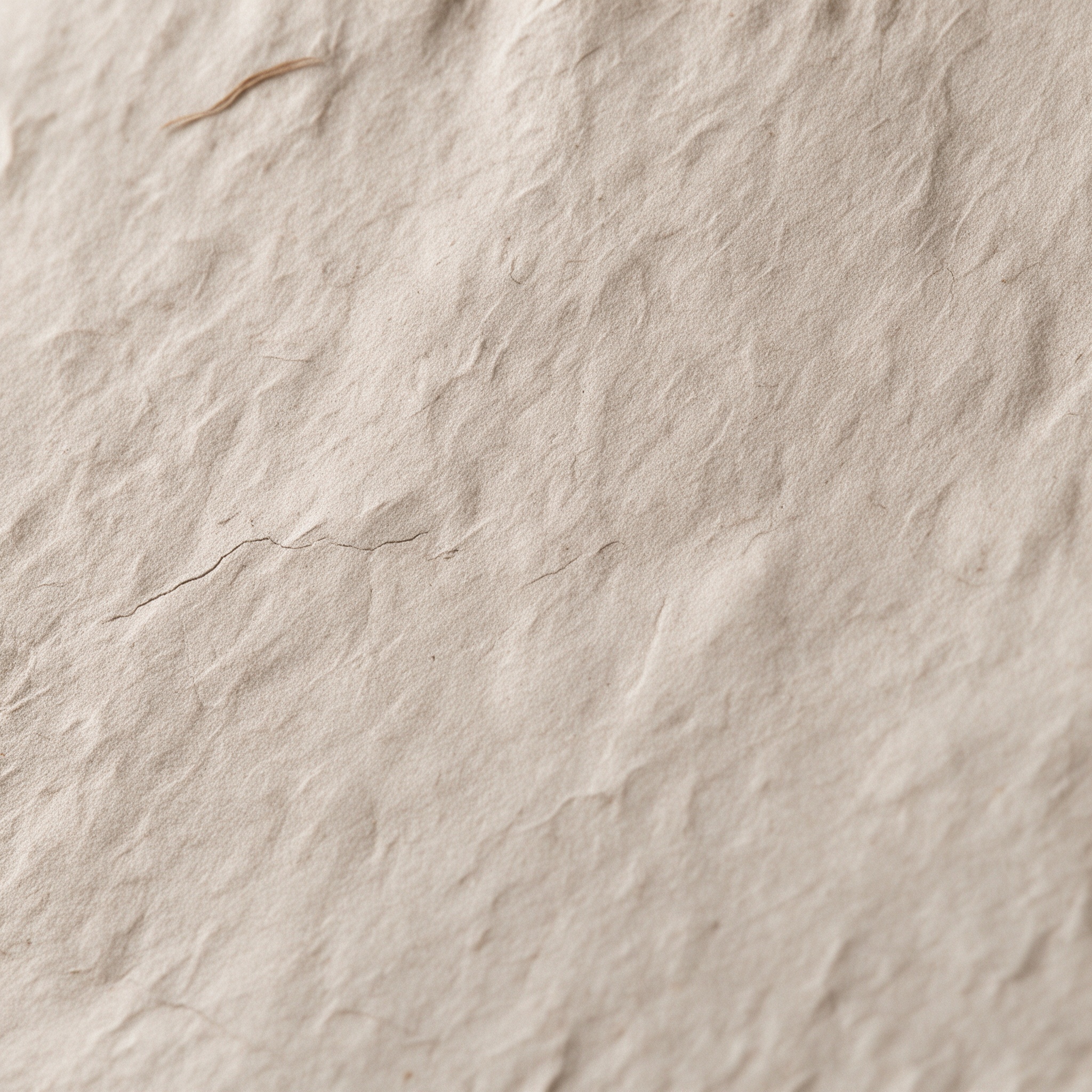
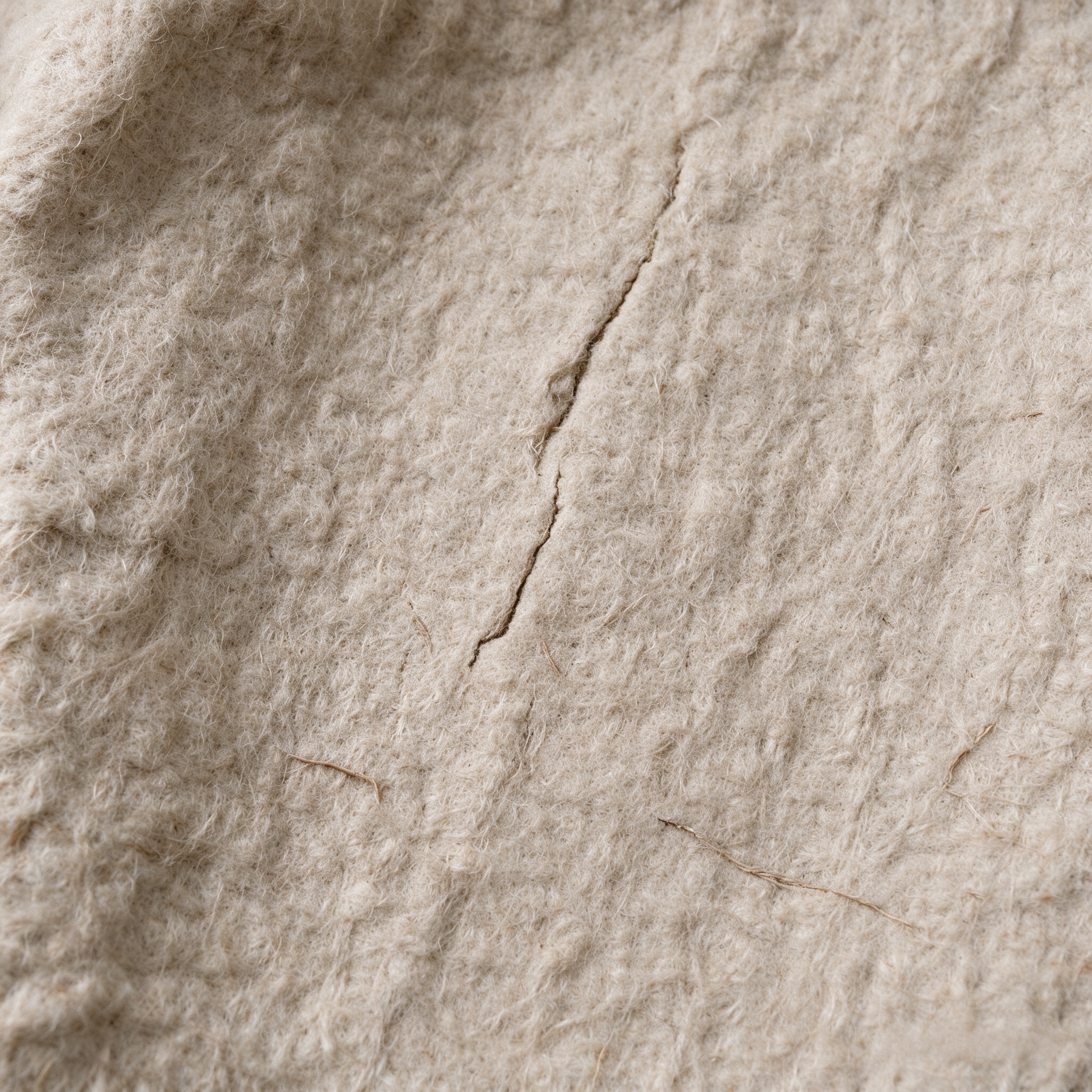
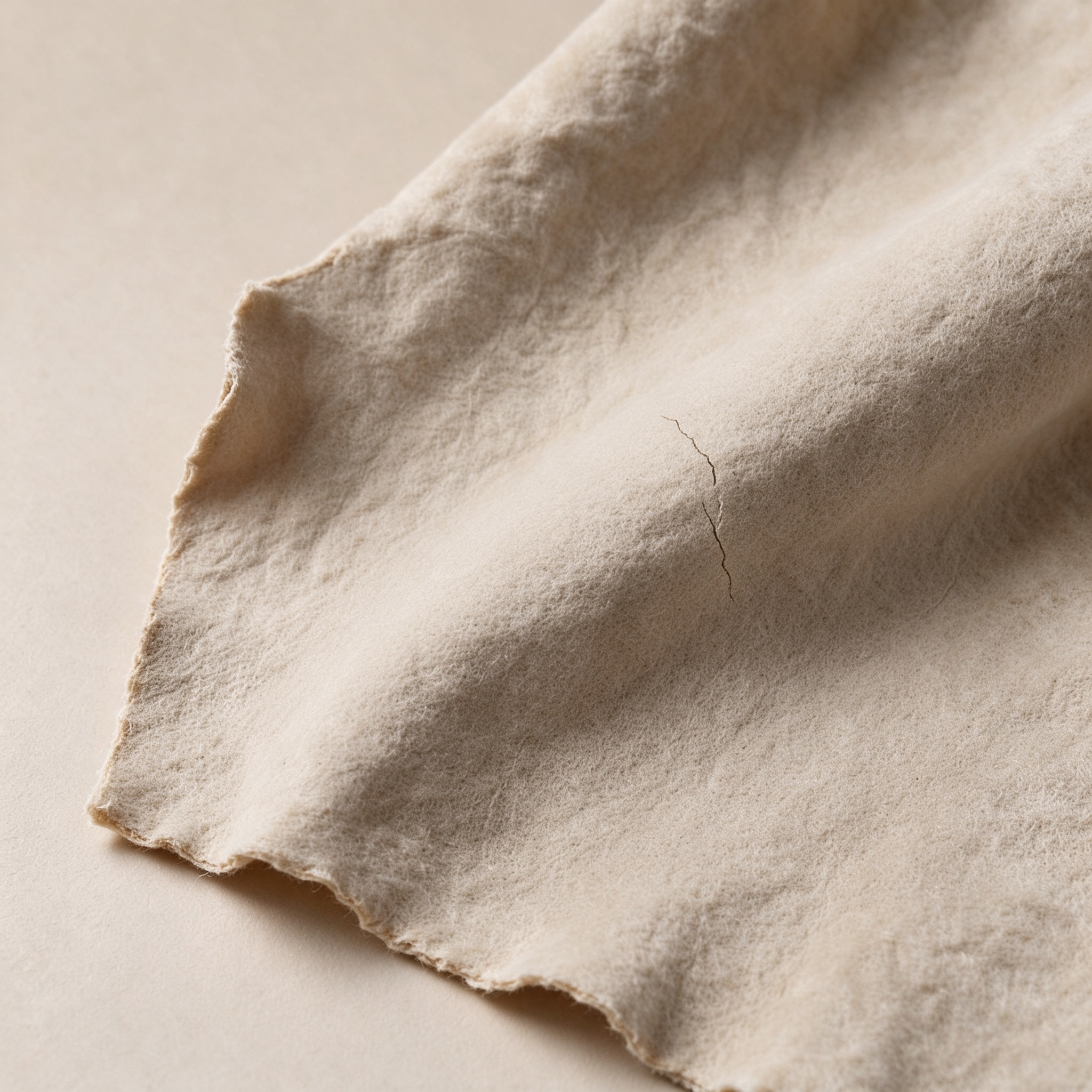
Light‑Gauge Natural Bark Cloth Thinner homogenised fibre sheet. Texture: fine fibre texture, lightweight, high drapability Post‑treatment: natural‑fibre blank standard; natural‑wax conditioning optional Applications: lampshade substrates, bookbinding, thin wall‑covering, artistic accessories Surface‑change behaviour: progressively gains suppleness with handling; a pale warm oat tone deepens gently over indoor time.
Medium-Gauge Natural Bark Cloth (Brand Core Grade) Balanced-thickness sheet, well-homogenised by repeated beating-rinsing cycles, stone-pressed to interlock fibres into a dense, firm, planar sheet free of loose fly-away fibres. Texture: substantial dry felt hand-feel, balanced drape and structural stability. Post-treatment: natural-fibre blank standard; natural-wax conditioning optional. Applications: upholstery cushions, headboard facings, wall panels, artistic garment-adjacent pieces. Surface-change behaviour: ongoing softening through use; subtle warm tonal deepening indoors.
Heavy-Gauge Natural Bark Cloth Dense, stone-compacted body, firm and planar, free of loose fly-away fibres, retaining pronounced hand-beaten texture variations. Texture: pronounced organic surface character, substantial body, lower drape. Post-treatment: natural-fibre blank standard; natural-wax conditioning optional. Applications: installation-art substrates, decorative panel-work, luxury packaging material. Surface-change behaviour: surface softens with contact; slow tonal maturation indoors.
Blank supplementary description ‑ Natural‑fibre blank: final state after full rinse‑detox, shade‑dry and stone‑press; no added surface wax. Retains maximum breathability.
‑ Wax‑conditioned blank: treated with plant‑derived natural wax; enhances soil‑resistance, modifies hand‑feel; does not render material waterproof.
4. Working Characteristics & Physical Constraints
Yunnan Natural Bark Cloth is hand‑transformed forest‑fibre non‑woven sheet, with intrinsic material boundaries.
‑ Thickness variation: thickness fluctuates within individual sheets as well as batch‑to‑batch; typical working thickness 0.4 – 1.2 mm. Uniform thickness cannot be guaranteed.
‑ Sheet dimensions: original hand‑processed sheets follow the maximum obtainable cylinder‑size from tree‑trunk segments. Extra‑large formats require joining multiple cloth panels; joining seams count as inherent craft feature for large‑scale works.
‑ Machining & fabrication: Can be cut, stitched, laminated and bonded. Sharp tight repeated creasing may induce local fibre fatigue; favour gentle curved forming where possible. Machine‑washing must be strictly avoided.
5. Surface & Colour performance Boundaries
Base colour originates from inherent fibre tone shaped by tree‑growing conditions plus shade‑drying cycles.
‑ Light‑Gauge Natural Bark Cloth: pale warm oat base tone, subtle local tonal drift across sheet area. Dye‑uptake is uneven; not suited for perfectly‑uniform high‑saturation industrial‑colour requirements.
‑ Medium‑Gauge Natural Bark Cloth: warm grey-beige base; wax‑conditioned versions develop marginally richer warm hues.
‑ Heavy‑Gauge Natural Bark Cloth: pronounced organic tonal variation inherited from raw fibre source.
Surface‑finish options: Plant‑origin natural‑wax conditioning is available. Heavy synthetic high‑gloss coatings are avoided. Wax improves mild soil‑resistance, does not achieve waterproof performance.
6. Time- Dependent Surface Behaviour
As with many hand‑processed plant‑fibre substrates, Natural Bark Cloth evolves continuously under indoor light, humidity and physical handling.
Distinctive dual ageing behaviour of Natural Bark Cloth:
- Tactile change: material grows progressively more supple with repeated gentle handling (unique versus wood‑bark materials which primarily only shift colour).
2. Visual change: slow warm tonal deepening under indoor ambient light.
‑ Light‑Gauge Natural Bark Cloth: both softening and colour‑shift are clearly perceptible.
‑ Medium‑Gauge Natural Bark Cloth: balanced tactile maturation and tonal evolution.
‑ Heavy‑Gauge Natural Bark Cloth: more gradual softening; organic tonal‑variation becomes more pronounced.
Ageing performance differs piece‑by‑piece. Uniform change across all finished articles cannot be guaranteed.
7. Material Documentation & Project Considerations
Material documentation is available for selected production batches and applications. Deliverables may include botanical‑source statements, full detox‑rinsing workflow declarations, and third‑party test‑reports where existing.
Critical project reminder: Safety validation only applies to fully‑processed finished Natural Bark Cloth. Raw tree‑trunk / raw un‑rinsed bark is never supplied. For cross‑border shipments, relevant phytosanitary documentation shall be prepared upon request.
For contract, hospitality or public‑sector projects, fire‑safety performance, stain‑resistance, chemical‑compliance and end‑use suitability must be reviewed before specification. Not suitable for permanent wet‑zone environments.
8. Application Scope, Acceptance Criteria & Care Guidelines
Application‑scope grading
‑ Light‑Gauge Natural Bark Cloth: lampshade substrates, bookbinding, thin wall‑covering, artistic accessories
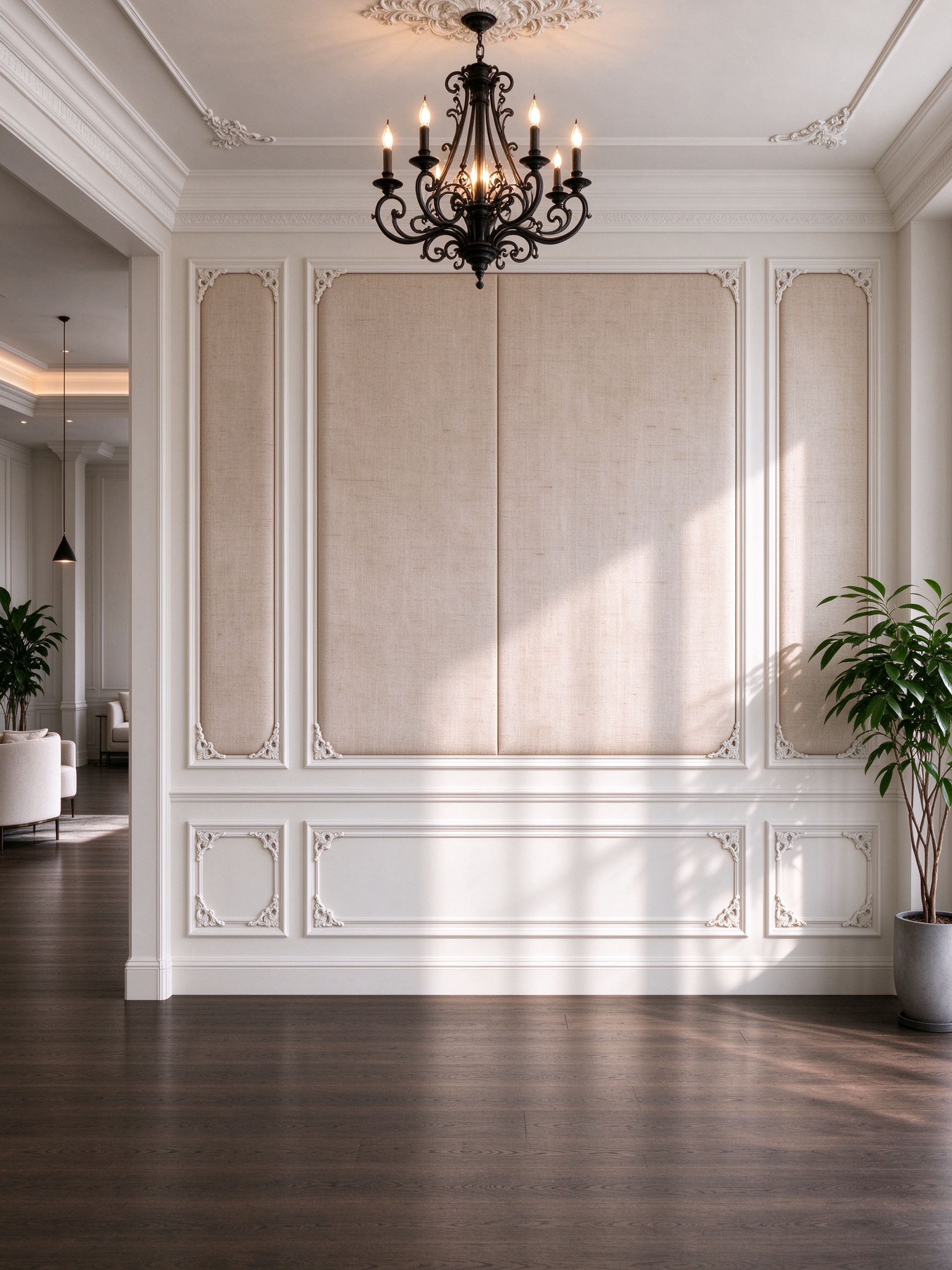
‑ Medium‑Gauge Natural Bark Cloth: upholstery cushions, headboard facings, wall panels, artistic garment‑adjacent pieces
‑ Heavy‑Gauge Natural Bark Cloth: installation‑art substrates, decorative panel‑work, luxury packaging material
Process‑limitations: natural sheet‑size limits; large‑format assemblies require panel‑joining; no machine‑washing; avoid persistent high‑humidity environments.
Hand‑material acceptance criteria
In‑sheet thickness fluctuation, subtle fibre‑texture irregularity and faint tonal mottling count as inherent hand‑craft & biological features, not production defects.
Joining seams on multi‑panel large‑format assemblies are expected craft characteristics.
- Minor surface variance originating from manual beating‑rinsing workflows does not constitute quality‑failure.
Segmented care instructions
‑ For all grades: Store / deploy within dry‑indoor conditions. Machine‑washing is strictly forbidden. If cleaning is required, use gentle cool‑water hand‑soak, light squeeze, flat‑dry entirely in shade (never direct sunlight). Detergent is generally unnecessary; material exhibits natural odour‑resistant fibre properties.
‑ Prevent continuous intense direct sunlight, which embrittles fibres and triggers uneven colour‑shift.
‑ Avoid harsh solvents, abrasive wipes and hot‑water immersion.
9. Material Swatchbook Service
For professional clients, spatial‑creators and material‑enthusiasts, to evaluate real‑world drape, surface texture, thickness and natural tonal range.
Request your free material swatch book; a flat €50 shipping fee applies for Europe, shipped directly from China.
Swatchbook holds small‑format reference specimens for project‑evaluation only. Due to natural‑fibre variability and hand‑processing variance, minor deviation between swatches and bulk goods may occur. Swatches serve purely for reference and shall not constitute sole‑acceptance‑criteria for bulk‑order‑delivery.